
Letta
Plataforma de código aberto para construir agentes com estado que mantêm memória persistente, aprendem continuamente e evoluem através da experiência.
Comunidade:
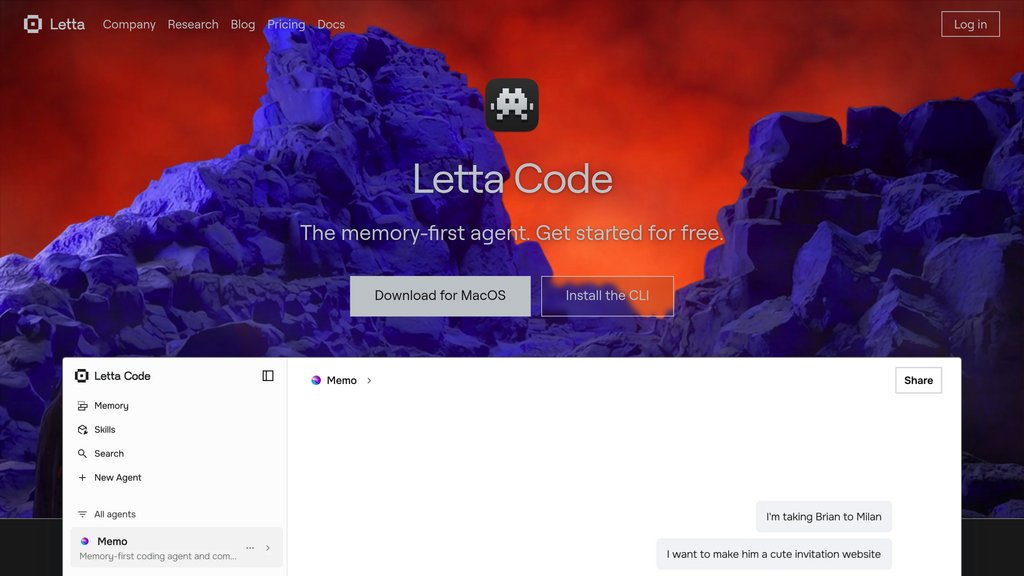


Visão Geral do Produto
O que é Letta?
Letta é uma plataforma de desenvolvimento de agentes de código aberto construída em torno de uma arquitetura centrada na memória, originada do projeto de pesquisa MemGPT na UC Berkeley. Ela fornece uma API de agentes que lida automaticamente com estado persistente, gerenciamento de contexto, chamadas de ferramentas e memória — para que desenvolvedores possam focar em construir agentes que genuinamente aprendem e melhoram ao longo do tempo em vez de resetar a cada sessão. Letta suporta implantação auto-hospedada via Letta Server ou uso na nuvem, e funciona com qualquer provedor de LLM. Seu produto principal para consumidores, Letta Code, é um agente de programação centrado na memória acessível do terminal ou qualquer dispositivo.
Recursos Principais
Arquitetura de memória persistente
Agentes mantêm blocos de memória contextual, memória de recordação para histórico de interações e armazenamento de memória de arquivo entre sessões — todos consultáveis e editáveis via API REST.
Computação em tempo de sono
Subagentes de memória em segundo plano refinam continuamente prompts, consolidam conhecimento e melhoram o contexto do agente entre sessões ativas sem intervenção do usuário.
Ambiente de desenvolvimento de agentes (ADE)
Interface visual sem código para inspecionar blocos de memória de um agente, passos de raciocínio e cadeias de chamadas de ferramentas — tornando depuração e ajuste de comportamento transparentes e diretos.
Orquestração multi-agente
Suporte integrado para agentes enviarem mensagens uns aos outros de forma síncrona ou assíncrona, habilitando tanto pipelines controlados por supervisor quanto colaboração peer-to-peer de agentes.
Integração extensiva de ferramentas
Suporta mais de 7.000 ferramentas incluindo funções definidas pelo usuário, ferramentas compatíveis com MCP e integrações pré-construídas executáveis em sandboxes na nuvem.
Agnóstico a modelo e portável
Blocos de memória e histórico de conversação são portáveis entre diferentes provedores de LLM, prevenindo vendor lock-in e permitindo trocas de modelo sem perder o estado do agente.
Casos de Uso
- Assistentes de programação personalizados : Desenvolvedores podem executar Letta Code como um agente de programação persistente que lembra contexto do projeto, preferências de codificação e decisões passadas através de cada sessão.
- Agentes de serviço voltados ao cliente : Empresas podem implantar agentes de longa duração que acumulam conhecimento sobre usuários individuais ao longo do tempo, habilitando experiências de suporte profundamente personalizadas.
- Agentes de pesquisa profunda : Agentes podem processar autonomamente grandes conjuntos de documentos em segundo plano, destilar descobertas na memória e fornecer insights relevantes sob demanda — como demonstrado na colaboração da Letta com 11x.
- Sistemas de recomendação : Agentes com estado podem rastrear comportamento e preferências do usuário ao longo do tempo para alimentar mecanismos de recomendação em melhoria contínua, como implantado pela BILT Rewards.
- Pipelines multi-agente : Equipes de engenharia podem compor redes de agentes especializados que compartilham estado e se comunicam para lidar com fluxos de trabalho complexos e de longo horizonte além da capacidade de um único agente.
Perguntas Frequentes
Alternativas ao Letta

HappyCapy
Computador Agent baseado em navegador que permite usuários implantarem e executarem AI Agents autônomos 24/7 em um ambiente sandbox na nuvem seguro.

Fine
Plataforma autônoma de codificação por IA que integra com fluxos de trabalho Git para automatizar tarefas de desenvolvimento de software e otimizar a colaboração em equipe.

Emergent
Agentes autônomos de programação com IA automatizando migração, modernização e tarefas de engenharia de software para acelerar ciclos de desenvolvimento.

Hermes Agent
Um agente autônomo de código aberto pela Nous Research que se auto-aprimora ao longo do tempo — construindo memória persistente, gerando suas próprias habilidades e executando através de mais de 14 plataformas a partir de uma única instalação.

Kiro
Ambiente de desenvolvimento integrado agentico que transforma ideias em especificações estruturadas, designs e código pronto para produção por meio de um fluxo de trabalho orientado por especificações.

Pi Coding Agent
Harness de codificação de terminal mínimo projetado para extensibilidade, permitindo desenvolvedores customizar fluxos de trabalho através de extensões TypeScript e pacotes.

Polsia
Plataforma autônoma de operação empresarial que cuida de planejamento, codificação, marketing e operações 24 horas por dia — nenhum funcionário necessário.

Orca
Um ambiente de desenvolvimento de agentes (ADE) gratuito e de código aberto que permite aos programadores executar múltiplos agentes de codificação em paralelo através de worktrees git isoladas.