

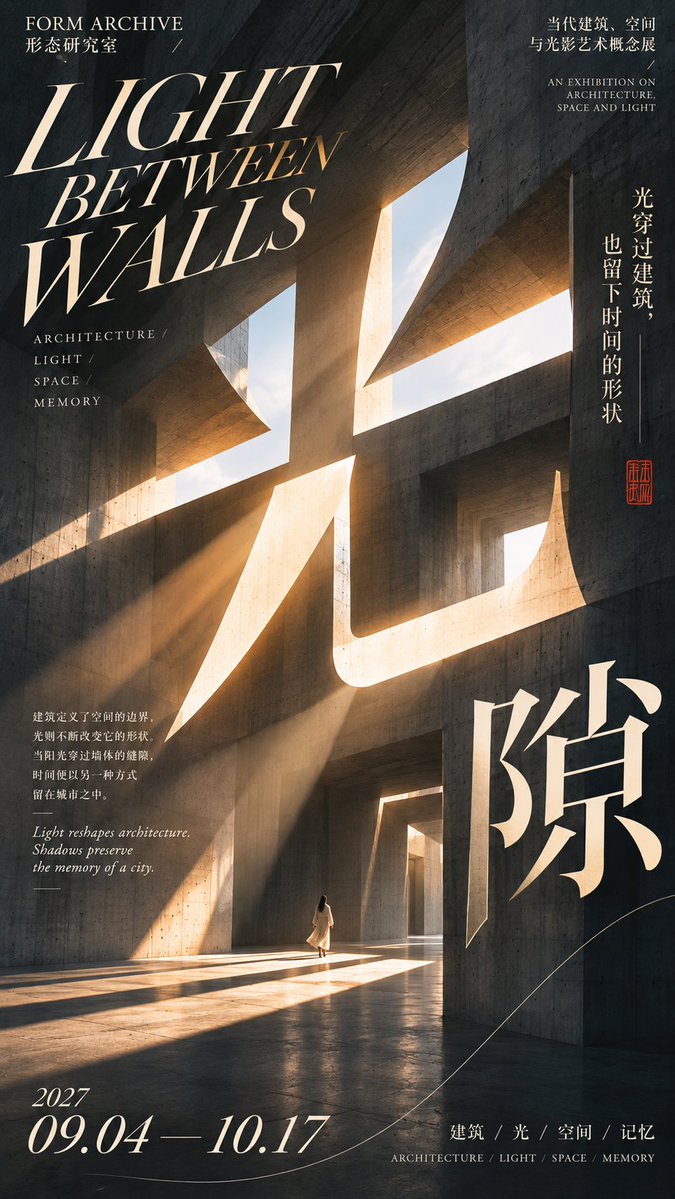
Create an experimental Eastern culture art poster with the quality of a professional design studio. 【Exhibition Theme】: ____ 【Chinese Main Title】: ____ 【English Main Title】: ____ 【Central Visual Subject】: ____ 【Visual Concept】: ____ 【Primary Color Palette】: ____ 【Exhibition Date and Institution】: ____ 【Curatorial Statement】: ____ 【Aspect Ratio】: 9:16 1. Overall Aesthetics and Design Language Combine Experimental Typography, Expressive Editorial Design, Contemporary Chinese Graphic Design, and the aesthetics of premium art publications. The result should unite the spirit of Eastern culture, modern typographic experimentation, and strong artistic expressiveness. Give artistic composition the highest priority and break away from the modular layouts of traditional posters. First establish an overall composition with powerful visual impact, then naturally integrate the typography, central subject, graphics, and exhibition information instead of filling content into a fixed template. 2. Central Visual and Typography Design Select a representative artistic object according to the theme. Use realistic photography, artistic painting, or a physically credible three-dimensional representation, emphasizing the subject’s material, form, lighting, shadows, and spatial depth. Use monumental experimental typography for the Chinese title. Options may include a modern high-contrast Song typeface, geometric character forms, expressive cursive calligraphy, or spatial three-dimensional lettering. Make the text part of the composition itself through extreme scale contrasts, partial cropping, offset overlaps, negative space, and perspective relationships. Create an inventive structural relationship between the subject and the typography. For example, architectural openings may form Chinese characters, a dancer’s movement may extend the strokes of calligraphy, brocade fabric may pass through the structure of the text, or birds’ wings may interweave with character forms. Avoid simply layering text over an image; emphasize credible spatial interaction and visual integration. 3. Experimental Artistic Composition Use a bold asymmetric composition, an open grid, and strongly directional visual movement. Depending on the theme, choose diagonals, spiraling movement, vertical extension, spatial perspective, or negative-space composition to establish a distinctive visual rhythm. Pair the design with an elegant English serif typeface and flexibly apply rotation, line breaks, displacement, vertical arrangement, and edge cropping. Let the Chinese and English text, numbers, and the subject’s silhouette create rich contrasts in scale, direction, density, and spacing. Allow highly dense text in selected areas while preserving natural white space elsewhere. The grid should remain hidden within the compositional order rather than appearing directly as regular information boxes. 4. Information Density and Free Layout Retain the exhibition date, curatorial institution, theme description, short Chinese and English texts, and any necessary professional annotations, but do not assign them to fixed information areas. Distribute text along the subject’s contours, typographic strokes, movement paths, and natural negative spaces so that the information itself participates in the artistic composition. The information should be rich without becoming block-based, and complex without becoming cluttered. Avoid a mechanical structure with a title at the top, a subject in the middle, and an information bar at the bottom. Also avoid standardized headers and footers, rectangular information boxes, fixed columns, and excessive decorative fine lines. 5. Color and Materials Use a mature, restrained, and contrasting artistic color palette. Emphasize authentic material qualities, natural light and shadow, delicate textures, and a premium print finish. Keep color fields rich and clean, with abundant yet orderly detail. Avoid cheap CGI, random distressing, excessive glow, and meaningless decoration. 6. Final Presentation Across different themes, maintain consistent art direction, experimental typographic aesthetics, realistic materials, and precise Chinese-English typesetting. However, every work must have its own compositional logic and visual concept. Output a complete high-resolution art poster that delivers powerful visual impact from a distance while revealing rich material details, accurate text, and refined artistic typography when viewed up close. Avoid template-based layouts, excessive minimalism, garbled text, incorrect character forms, and meaningless piles of information. Make the poster not merely a medium for communicating exhibition information, but an experimental graphic design work that is itself worthy of being exhibited.