

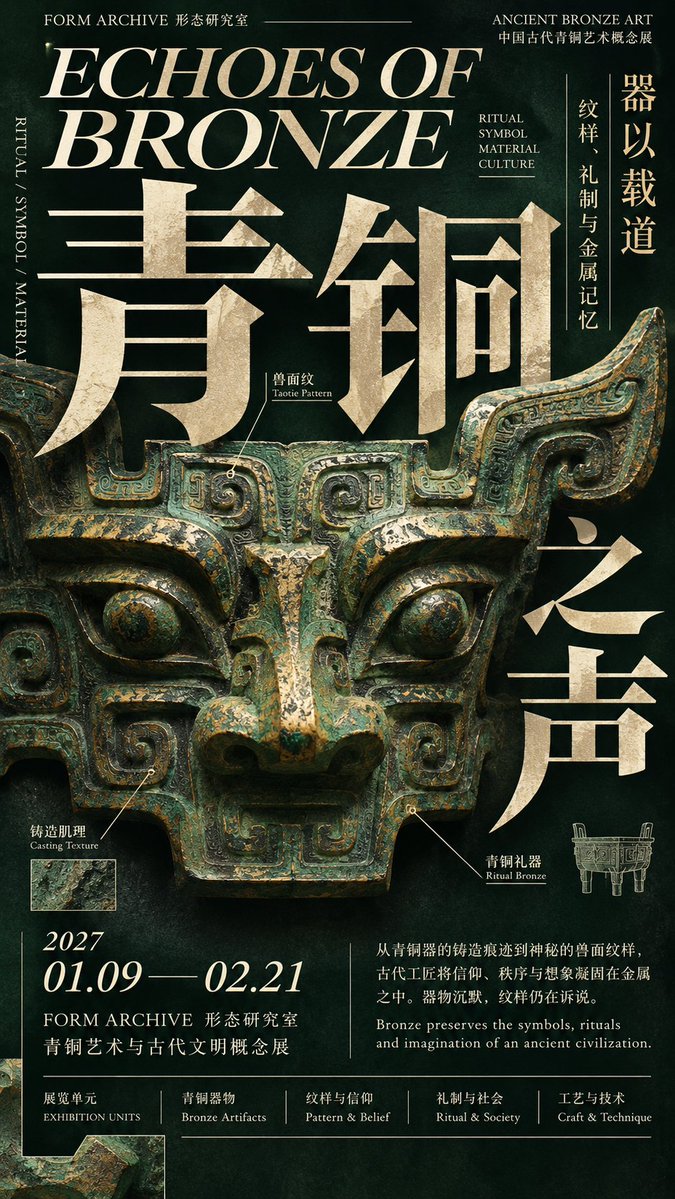
Create a 9:16 vertical poster for a contemporary Eastern culture and art exhibition, with the quality of a professional design studio. 【Exhibition Theme】: enter the theme 【Chinese Main Title】: enter the title 【English Main Title】: enter the English title 【Core Art Object】: sculpture, bronze artifact, ceramics, ink-wash landscape, etc. 【Typography Treatment】: giant geometric characters, calligraphy, bold Song typeface, vertical composition, etc. 【Primary Color】: enter the color 【Secondary Color】: enter the color 【Exhibition Date】: enter the date 【Curatorial Institution】: enter the name 【Exhibition Description】: enter a short description 1. Overall Visual Style Combine Experimental Chinese Typography, Museum Exhibition Identity, and Editorial Graphic Design, drawing on the design language of contemporary cultural and art exhibitions, museum visual identities, and premium art catalogs. The overall design should convey a distinctive Eastern cultural character, contemporary experimentation, precise editorial composition, and rich information density. It should not be an ordinary image with a title added on top. Typography, imagery, materials, and information should work together to form a complete professional poster. 2. Core Visual and Typography Design Select a culturally meaningful art object based on the theme and depict it through museum-grade photography or realistic artistic painting, emphasizing its material, structure, lighting, shadows, and details. Allow partial enlargement, cropping, and elements extending beyond the frame to create strong visual tension. Use experimental typography at a monumental scale for the main Chinese title. This may include a modern high-contrast Song typeface, geometric sans serif, or authentic brush calligraphy. Create visual impact through vertical composition, partial cropping, misalignment, displacement, and overlapping layers. Establish a convincing spatial relationship between the typography and the art object. For example, sculptures and giant characters may obscure one another across foreground and background layers; bronze patterns may echo the structure of the characters; ceramic objects may interweave with vertically arranged text; or calligraphic brush movements may merge with the landscape. Pair this with an elegant English serif title to create a rich bilingual typographic hierarchy. 3. High-Density Editorial Layout Use a rigorous asymmetric grid system that combines horizontally and vertically arranged Chinese and English text, precise alignment, thin dividers, narrow sidebars, and multilevel information organization. Place the curatorial institution, English title, and exhibition category at the top. Use the giant Chinese title and art object to form the visual center in the middle. At the bottom, include the exhibition date, thematic description, artwork notes, and two- or three-column curatorial text. The poster should have the information density of a mature art exhibition identity, with abundant content but a clear reading hierarchy. All supporting text must have genuine meaning; do not use random characters or meaningless placeholder information. 4. Color and Material Treatment Use a sophisticated, restrained, and culturally expressive color system, such as bronze green with antique gold, ink black with limestone white, deep terracotta brown with blue-white glaze, or warm xuan-paper white with mineral stone blue and stone green. Emphasize the pores of natural stone, bronze casting patterns, layers of ceramic glaze, authentic brushstrokes, and delicate paper texture. Preserve natural light and shadow, crisp printed edges, and the tactile quality of a premium art publication. Avoid cheap-looking CGI, excessive glow, and arbitrary distressed effects. 5. Series Consistency and Output Requirements When creating a continuing series, maintain consistent experimental Chinese typography, professional Chinese-English typesetting, editorial grids, complete exhibition information, and art-direction quality, while allowing each theme to use its own composition, color palette, and visual concept. Deliver one complete, high-resolution 9:16 vertical poster. It should have strong visual impact at thumbnail size and reveal rich material details and precise typography when enlarged. Avoid excessive minimalism, ordinary images with titles added on top, incorrect Chinese characters, garbled English, meaningless decoration, template numbers, and chaotic information clutter. Ensure a professional level of finish appropriate for the key visual identity of a mature cultural and art exhibition.