

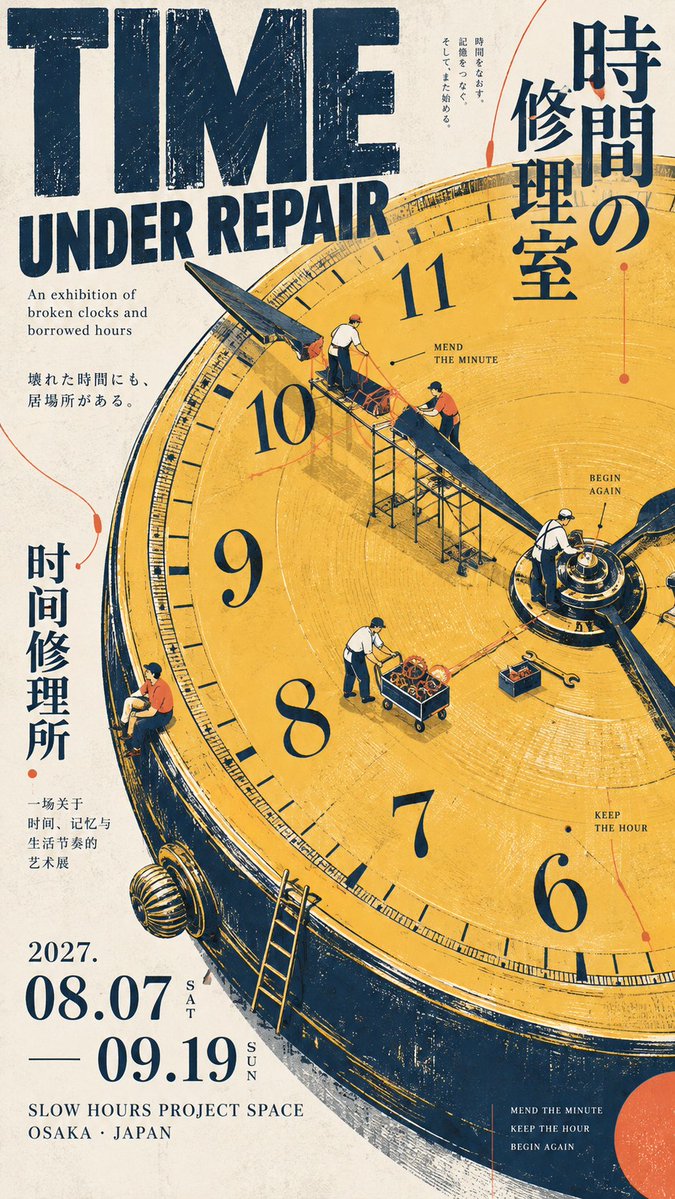
Poster theme: 【enter theme】 Core object or material: 【enter main subject】 Craft or transformation process: 【enter process】 Important visual details: 【enter tools, textures, or characters】 Main title: 【enter title】 Primary color palette: 【enter color scheme】 Exhibition information: 【enter date, location, etc.】 Design a 9:16 vertical Japanese retro craft art poster that transforms time, material structures, and handmade production processes into a narrative visual work. Blend the design languages of traditional printmaking, modern editorial layout, and craft archives throughout the composition. Enlarge the core object or material substantially to reveal its internal structure, surface texture, production marks, or restoration details. The main subject should have a distinctive silhouette and rich local variations, making it the visual center of the entire composition. Add miniature figures, tools, craft installations, or working scenes according to the theme. Use the contrast in scale between the main subject and supporting elements to convey the complexity of the production process while allowing viewers to discover stories hidden within the image. The composition may use partial cross-sections, layered structures, tilted perspective, or interwoven relationships between materials. Different elements should develop around the same craft process and form a complete visual logic rather than simply presenting a list of objects. Use aged off-white paper, a limited high-contrast color palette, hand-drawn lines combining thick and thin strokes, natural ink wear, and printmaking grain. Emphasize the tactile qualities of the materials themselves, such as realistic textures of metal, rock strata, clay, or fabric. Use large Chinese and Japanese titles, an English exhibition name, small craft annotations, and any necessary explanatory text. Typography may be integrated around the material structures, but it must not obscure key details or disrupt the visual hierarchy. The final result should be a retro craft poster with museum-exhibition quality, balancing visual impact, material detail, and cultural expression. Avoid inaccurate material textures, the mixing of unrelated craft techniques, and excessive decoration.