

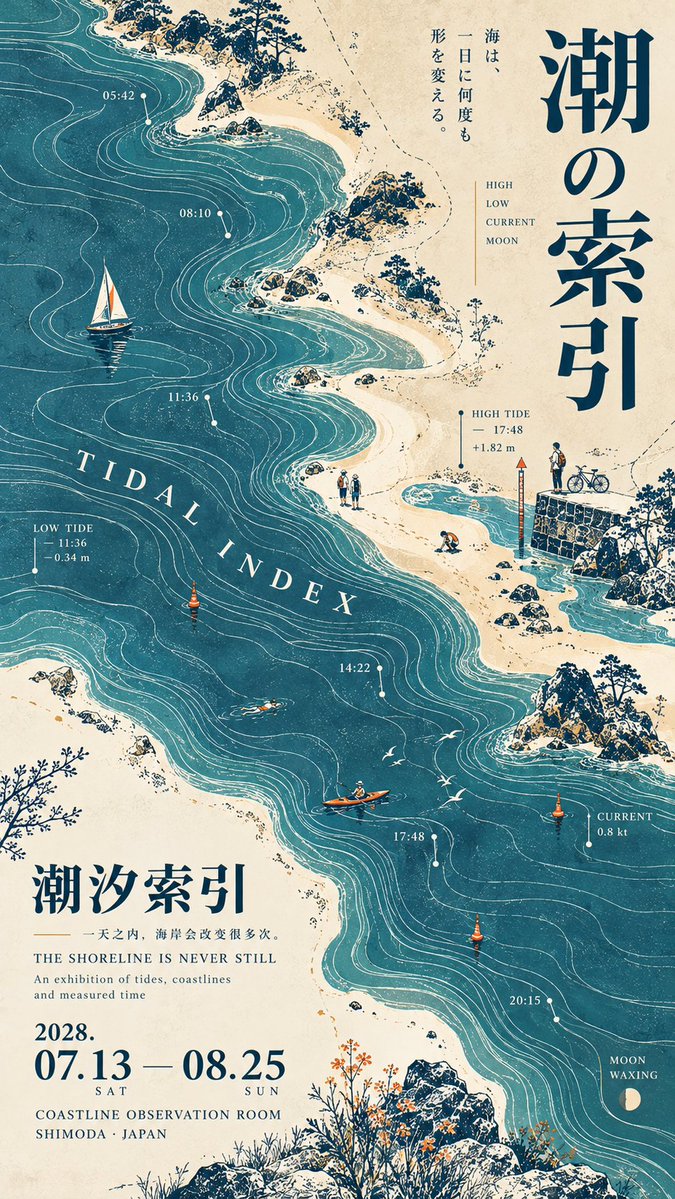
Observation theme: 【enter theme】 Core natural subject: 【enter subject】 Primary observation method: 【cross-sectional structure / cyclical changes / movement trajectory / natural textures】 Main title: 【enter title】 Primary color palette: 【enter color scheme】 Exhibition information: 【enter date, location, etc.】 Create a 9:16 vertical Japanese-style natural observation art poster that combines natural-history illustration, scientific infographics, retro printing, and contemporary exhibition design. Transform the natural phenomenon into a visual work with both artistic beauty and observational value. Enlarge the core natural subject significantly so that it becomes the primary visual focus of the composition. Depending on the theme, use a cross-section, cycle, flow trajectory, or morphological transformation to display the subject’s most recognizable characteristics. Add enlarged details, observation points, fine guide lines, scales, and structural annotations around the main subject. The information should have clear logical relationships, allowing viewers to understand the natural subject by following the composition’s reading path. Use a warm off-white aged-paper background, paired with a nature-inspired primary palette and a small number of accent colors. Create the timeworn appearance of a natural-history atlas through soft color layers, precise hand-drawn lines, and retro print grain. The composition should balance a large-scale main subject with small informational details, creating a clear contrast in scale. Distribute supporting graphics, recording lines, and explanatory text naturally along the subject’s structure while preserving the precise order characteristic of scientific atlases. Combine large Chinese or Japanese titles, English subtitles, vertically arranged explanations, and small observation labels in the typography. All textual information should correspond to the theme; avoid arbitrarily inserting meaningless scientific terminology or fabricated data. The final image should simultaneously convey the rigor of natural observation, the visual impact of an art poster, and the sophistication of mature editorial design. Avoid conventional textbook-style layouts, mechanical piles of charts, and excessively realistic commercial photography effects.