

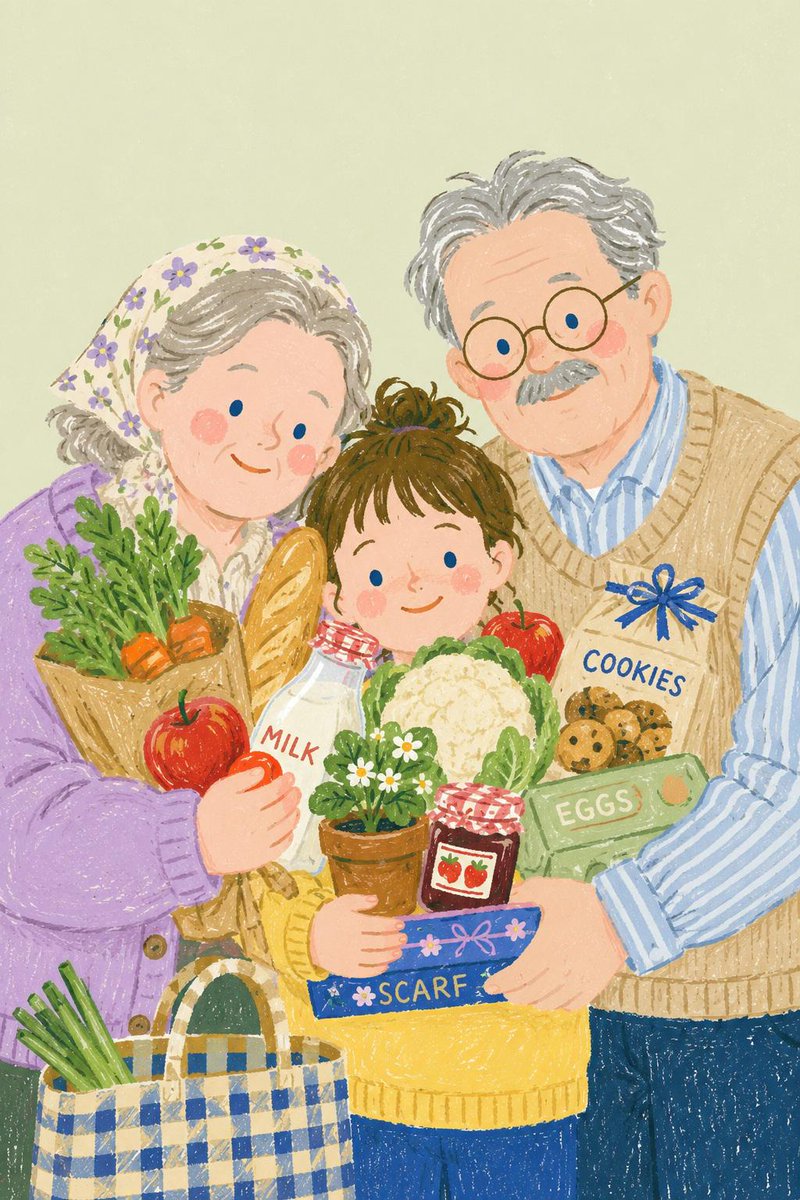
Task: transform the uploaded original photograph into a charming, hand-painted children's storybook illustration. Input: use {{UPLOAD ORIGINAL PHOTO}} as the reference image. Style: create a traditional hand-painted picture-book illustration using gouache and colored pencil on lightly textured paper. Draw visual inspiration from warm, nostalgic Japanese and European children's book illustrations. Use soft painterly brushwork, delicate pencil outlines, visible pigment texture, subtle dry-brush marks, and imperfect hand-drawn details. Include fine paper grain, gently chalky pigment, and subtle watercolor-like color variation. The finish must feel authentic, traditional, handmade, and organic, never like a digital filter or 3D render. Subject preservation: preserve the recognizable identity, facial structure, age, hairstyle, skin tone, and distinguishing features of every person. Maintain the exact number of people, body positions, gestures, head angles, interactions, subject arrangement, and overall framing. Preserve clothing designs, silhouettes, and recognizable accessories while translating them into painted fabric textures. Retain important objects, pets, flowers, food, furniture, and background elements. Preserve the original expressions, emotions, and relationships. Do not add people, remove important subjects, alter relationships, or replace the original scene. Illustration treatment: simplify facial details into expressive picture-book features while retaining each person's recognizable likeness. Use gentle cheek blush, softly defined noses, simple expressive eyes, and natural smiles only when present in the source. Render skin in warm peach and natural tones with visible painterly texture and soft tonal transitions. Paint hair with layered, flowing brushstrokes, fine hand-drawn strands, and natural color variation. Give clothing softly painted folds, knitted textures, delicate seams, and subtle pencil details. Replace sharp photographic contours with organic, slightly irregular hand-painted edges. Preserve meaningful details while simplifying tiny elements into elegant illustrated shapes. Use gentle, diffuse shading, minimal harsh shadows, and no dramatic photorealistic lighting. Color palette: muted pastels, warm cream, sage green, dusty blue, lavender, butter yellow, soft coral, muted rose, and warm earthy browns. Keep saturation soft and restrained with occasional natural pops of color. Use low-to-medium contrast with clear subject separation, soft creamy highlights with a subtle chalky finish, and warm desaturated shadows without black digital gradients. Background: retain the original background and its essential objects. Translate its elements into simplified, softly painted forms consistent with the storybook aesthetic. Use gentle atmospheric separation rather than photographic depth of field. Reduce distracting details without changing the location or scene. Preserve the original dominant colors while allowing subtle warm or pastel harmonization. Composition: match the original framing, camera angle, and spatial relationships. Do not unnecessarily crop, zoom, extend, or reposition the image. Preserve its aspect ratio and visual hierarchy while creating a cohesive illustrated composition. Lighting and mood: use soft natural daylight with gentle, evenly distributed illumination. Create a tender, comforting, innocent, nostalgic, intimate, and quietly joyful mood, like a cherished moment illustrated in a beautifully printed children's book. Keep the emotional tone sincere and understated, avoiding exaggerated cuteness or artificial sentimentality. Quality control: remove the photographic rendering while preserving the source image's recognizable content. Avoid photorealistic skin, plastic or airbrushed faces, glossy 3D rendering, anime or manga styling, exaggerated cartoon proportions, oversized eyes, unnatural facial changes, excessive outlines, neon colors, harsh black shadows, heavy blur, artificial bokeh, unnecessary decorative elements, unrequested text or lettering, watermarks, signatures, and unintended changes to the original composition. Final result: a cohesive, high-quality, hand-painted storybook illustration that immediately resembles the original photograph, as if a skilled children's book illustrator lovingly painted the moment by hand.