

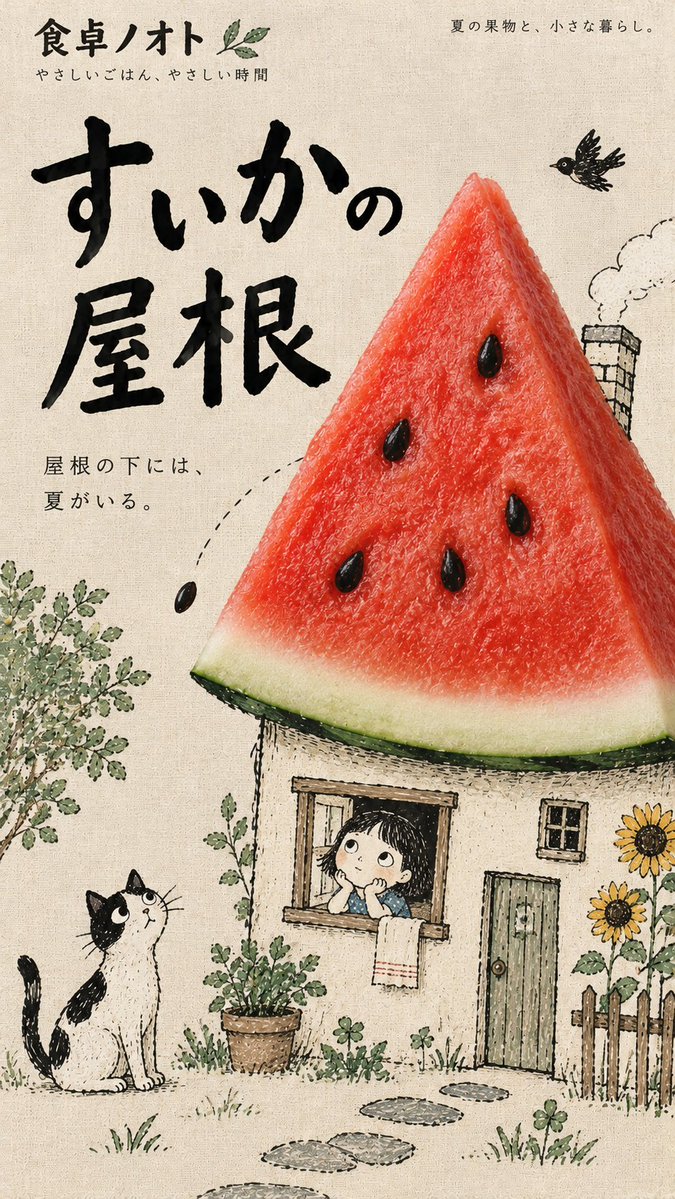
[Customize] Food: [Real fruit, vegetable, or ingredient] Subject: [Handdrawn character, animal, or object] Creative Interaction: [How the food transforms into part of the illustration] Magazine Title: [Original Japanese magazine name] Headline: [Short Japanese feature title] Caption: [Short supporting Japanese text] Color Palette: [Soft background + contrasting food colors] Aspect Ratio: 9:16 Create an original Japanesestyle editorial magazine cover blending realistic food photography, whimsical handdrawn illustrations, subtle embroidery, and natural linen textures. Visual Concept: Transform [Food] into an imaginative part of [Subject] through [Creative Interaction]. The food should become a functional element of the illustrated world—a rooftop, hairstyle, slide, musical instrument, or another unexpected object. Preserve authentic photographic food textures, natural colors, and realistic lighting. Ensure seamless visual integration with the illustration, not a pastedon collage. Illustration Style: Naive black ink drawings, loose irregular strokes, playful asymmetrical proportions, delicate pencil marks, and occasional handmade stitching. Characters should feel quirky, expressive, and full of life. Keep the linework imperfect, organic, and charming. Composition & Typography: Use one strong visual concept, an oversized subject, generous negative space, and a playful asymmetrical editorial layout. Integrate Japanese typography naturally into the composition. Vary the scale and placement of the magazine title and main headline, allowing handwritten lines, shapes, and text to interact. Keep supporting text minimal, meaningful, and readable. Colors & Textures: Soft linen paper, subtle fabric fibers, matte printing, muted earthy backgrounds, and natural lighting. Let the realistic food provide the strongest color accent and visual contrast. Art Direction: Whimsical, handcrafted, slightly eccentric, nostalgic, yet sophisticated. Prioritize visual surprise, expressive linework, clear silhouettes, and creative interaction between photography, illustration, and typography. Avoid glossy CGI, vector cartoons, excessive embroidery, cluttered layouts, dense text, generic decorations, copied branding, artist signatures, and watermarks. Generate one complete, original 9:16 magazine cover.