

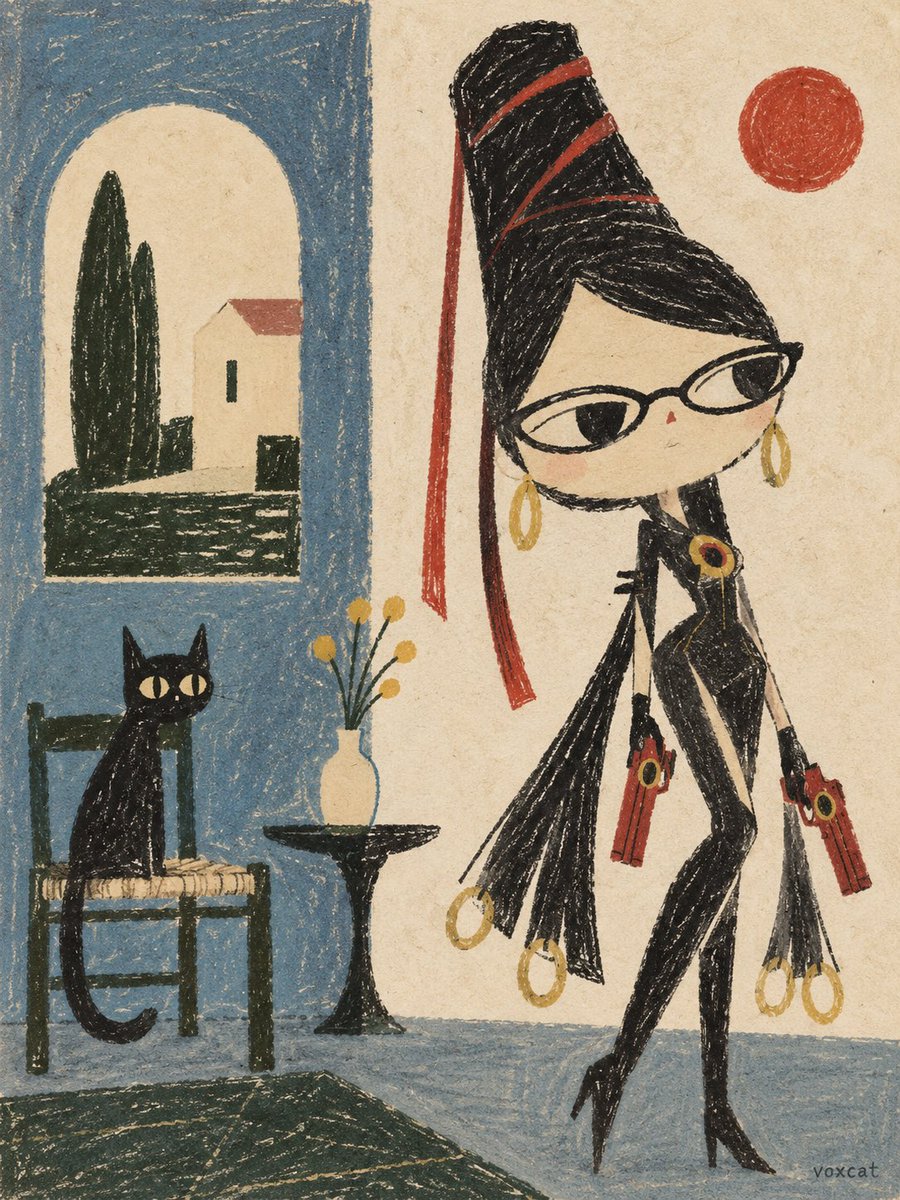
【CHARACTER / WORK】, neo-naïve illustration × mid-century modern picture-book art × primitive modernism × contemporary naïve character design. If 【CHARACTER】 is provided, redesign the character as a minimalist, awkward, primitively geometric picture-book figure. If 【WORK】 is provided, select 4–6 of its most representative central characters and translate them consistently into the same visual system. Preserve identity anchors with high priority: hairstyle silhouette, hair color, primary eye color, the character’s dominant color, overall clothing silhouette, headwear, weapons, tail, horns, ears, emblems, and the most recognizable identity symbols. Do not use an ordinary chibi style. Compress complex characters into primitive geometric character designs using basic forms such as circles, ovals, squares, trapezoids, elongated bars, and pear shapes. Make the proportions deliberately inaccurate, the body slightly awkward and unbalanced, the limbs simplified, and the facial features extremely sparse; prioritize silhouette over anatomy. Awkward anthropomorphic mascot design: vacant, aloof, slow, confused, impassive, innocent, unconcerned, and slightly strange. Emphasize only the single strongest visual memory point. Wax crayon × oil pastel × colored pencil × dry gouache; scribbled color fill × broken contour × dry edge × pressure variation × visible paper tooth × uneven pigment density × rubbed crayon texture. Do not fill the colors completely; allow the paper grain to show through. Retain slight edge wobble, breaks, retraced marks, and misalignment, preserving the imperfections of hand drawing. Flattened architectural composition: compress buildings, doors, windows, tables, chairs, plants, and streetlights into large rectangles, broad color blocks, and a few lines. Flatten the space without emphasizing perspectival depth. Composition formula: large rectangle × vertical character × simple circle / accent shape. Place the character in the lower center or on one side, environmental blocks on the opposite side, and leave a large area of negative space above. Muted modernist palette: sage green, cream, teal, bottle green, ochre, dusty blue, warm beige, and near-black; adjust automatically according to the character’s dominant color. Add only one small area of highly saturated vermilion, burnt orange, coral red, or bright yellow, applying it to the character’s most important identity symbol. Non-illusionistic flat lighting × minimal tonal modeling. Do not use realistic photographic light and shadow. Establish volume mainly through silhouettes, color blocks, paper texture, and subtle local tonal variations. Use a clean paper-like background color field in pale gray-green, cream white, gray-blue, beige, or pale pink. Retain only a few highly geometric, symbolic, and flattened everyday or architectural elements. Naïve × quiet × awkward × deadpan × minimal × poetic × slightly absurd × handmade × modernist. The final result should resemble a work expressed through the language of children’s drawing, created by an adult illustrator who consciously controls composition, proportion, color, and negative space—not an ordinary child’s drawing, cartoon sticker, vector illustration, 3D render, or smooth digital flat coloring. Do not include any text except for a tiny “voxcat” signature in the bottom-right corner.