

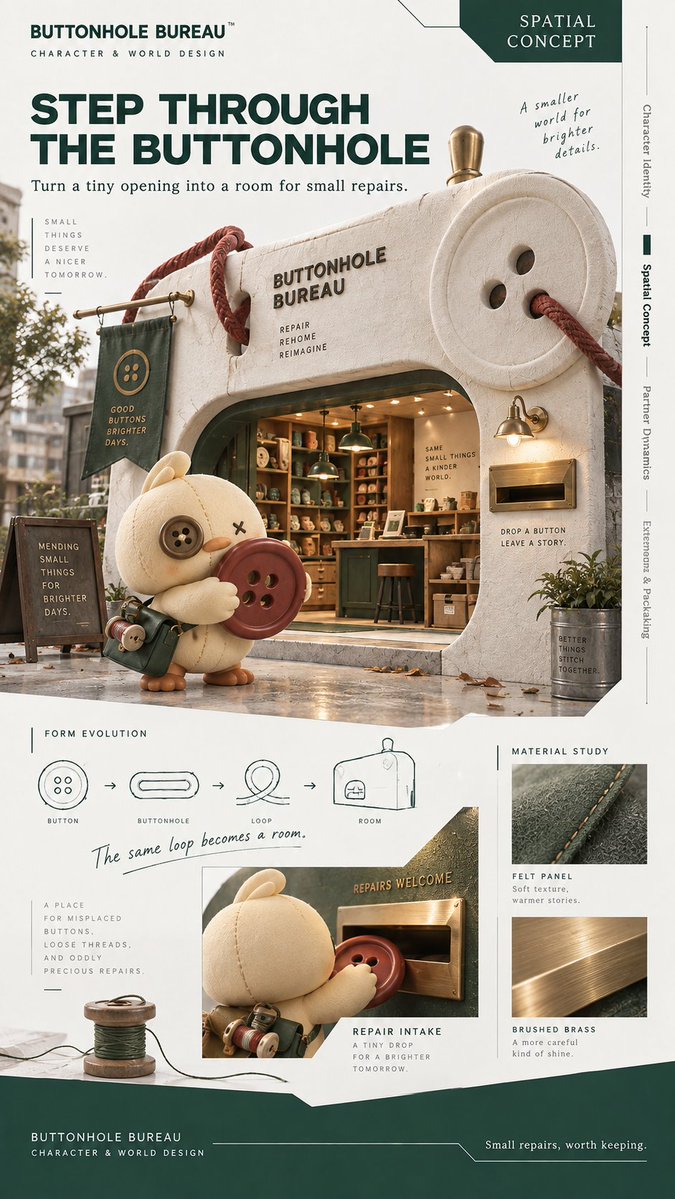
Create a complete 4-page IP design proposal for an original character brand. [IP Name]: [Core Character]: [Character Personality]: [World / Brand Concept]: [Primary Colors]: [Secondary Accent Colors]: [Material Direction]: [Visual Tone]: quirky, collectible, editorial, premium, design-forward [Language]: English [Aspect Ratio]: 9:16 vertical Build one consistent visual identity across all pages, with the same character proportions, facial features, signature accessories, color system, typography, materials, and proposal layout. Use a premium editorial case-study style with a small brand lockup, irregular dark chapter tab, slim vertical navigation, asymmetric footer, controlled whitespace, fine annotations, and subtle cut / fold geometry. Keep the layout rich in detail but clean and professionally art-directed. Page 1 — Character Identity Present one large hero character, 3–4 key identity anchors, silhouette tests, shape-language studies, and front / side / back turnaround views. Clearly establish what makes the character recognizable. Include only meaningful design notes, no fake parameters or generic character-profile data. Page 2 — Design Development Show the character-design process through rough shape exploration, 2D sketches, clay model, 3D wireframe, partial scan-style construction view, proportion studies, seam or structural logic, exploded anatomy, rejected silhouette alternatives, and material close-ups. Make the page feel like a real character-design development board rather than a futuristic HUD. Page 3 — World & Story Place the character inside a fully designed environment derived from the same visual language. Include one strong hero scene, one smaller interaction scene, a concise form-evolution study, and a few material or spatial details. The environment should feel like a natural extension of the character rather than an unrelated backdrop. Page 4 — Extensions & Packaging Create several clearly different character variations based on specific tasks, tools, outfits, or use cases while keeping the core identity unchanged. Add one premium collectible packaging or product application and a small extension-logic diagram showing how the character can scale into a commercial IP system. Across all pages, vary the internal composition instead of repeating the same grid. Use large, medium, small, and micro visual scales to create rhythm. Let sketches, 3D renders, annotations, close-ups, materials, and product applications work together as design evidence. The final result should feel like a real creative-agency IP proposal: distinctive character identity, visible design process, coherent worldbuilding, storytelling potential, and believable commercial extension. Avoid generic PPT layouts, rigid card grids, childish scrapbook styling, meaningless English, fake technical data, excessive handwriting, decorative stickers, sparkles, page numbers, watermarks, inconsistent character features, or changing the character into different species across pages.