
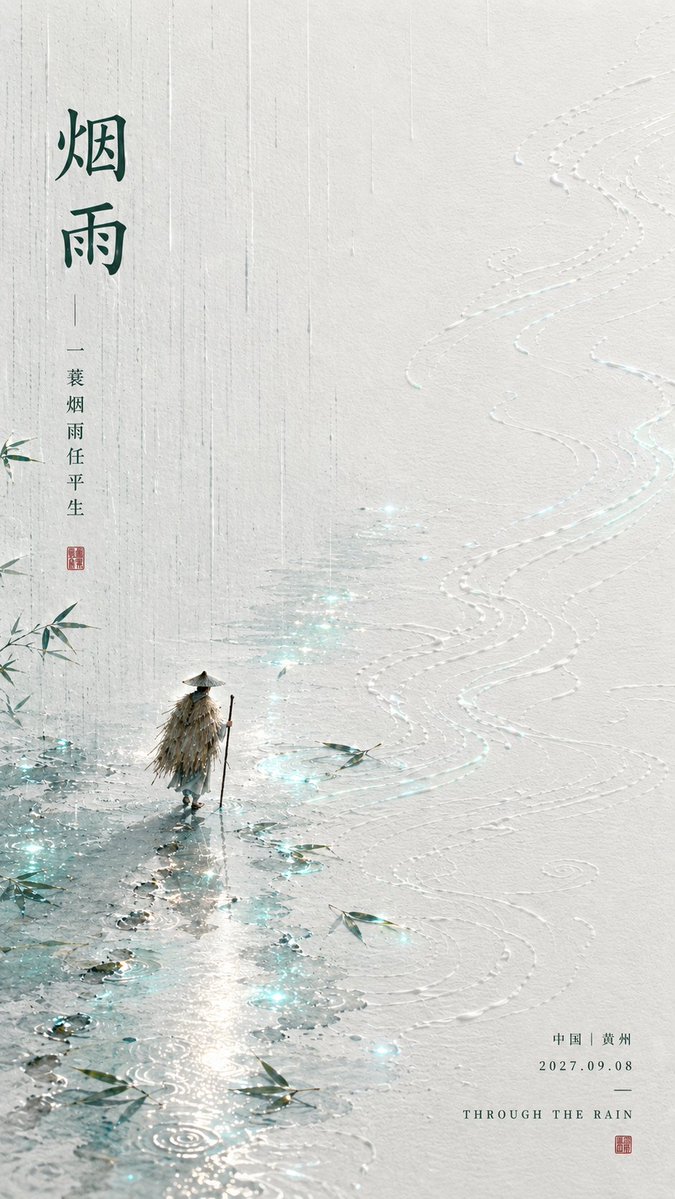
Generate a 9:16 Oriental poetic poster of flowing light and negative space. Based on a [classical poem line], extract a two-character theme [theme] and a core emotion [emotion]. Do not literally reproduce the full ancient scene; instead render a visual translation using one small subject [subject] and one clear light movement [shatter / connect / scatter / gather / flow / hide / pass through]. Use a pure-white premium handmade art-paper background, with about 65%–75% vast negative space; the subject occupies only about 8%–20%. Add a meaningful white low relief [rain marks / water ripples / mountain ridge / wind lines / old path / flower shadows], simple from afar and only discovered up close. Locally add flowing-light colors such as pearl white, ice blue, light purple, teal-green, champagne gold and amber gold, letting the light arise naturally from water, porcelain, jade, paper or spatial paths, forming a faint, shimmering flow of light. Keep the colored areas restrained—no neon and no full-screen gradients. Human figures may appear extremely small or be omitted entirely, leaving only a “human presence” through a teacup, a bamboo staff, an empty chair, a letter, or a lit window. The main title uses the two-character Chinese theme, paired with a concise poem line, location, date, and an English subtitle. Overall presentation: Oriental poetry × large negative space × low relief × small subject × material glow × flowing light × Editorial Design. The key is not merely to make the image glow, but to make “light the verb within the poem.”