
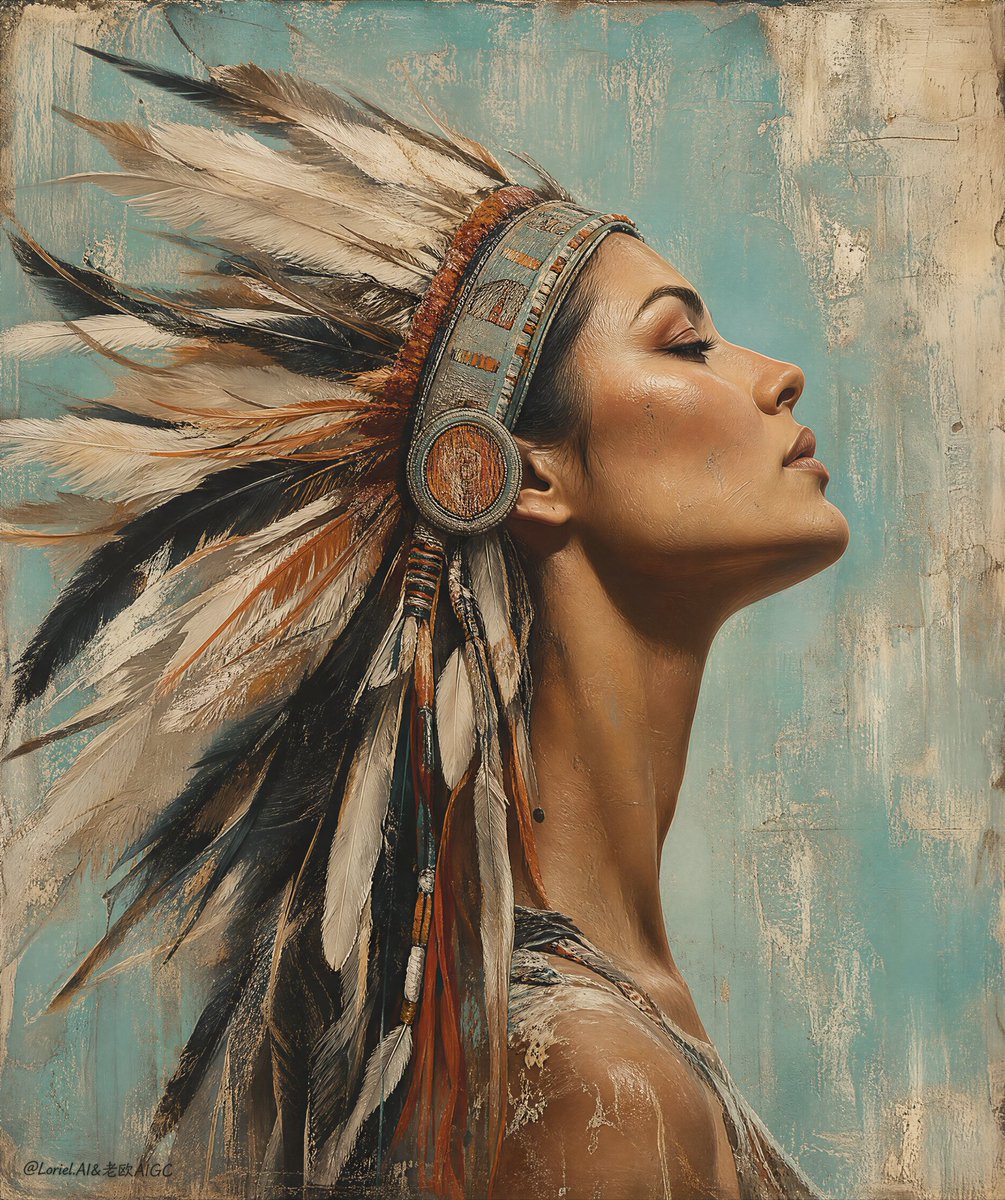
Create an ultra-premium 100% photorealistic ceremonial portrait poster with absolutely no readable text, no logo, no title, no watermark, and no typographic elements anywhere in the image. Preserve the core visual logic of a monumental upward-looking portrait with ceremonial feather adornment, weathered human skin, earthy tonal restraint, and an aged fine-art surface, while elevating it into a more spiritually overpowering and more collectible museum-grade key visual. The final artwork must feel like a Cannes-level heritage-fashion masterpiece: sacred, austere, tactile, human, and visually unforgettable. Core composition: Use a tall vertical composition focused tightly on the head, neck, upper chest, and shoulder line of one adult ceremonial figure. The face must tilt upward more decisively, with the chin lifted, throat elongated, and the eyes nearly closed or fully closed, as if caught in a moment of inner ascension, prayer, memory, or ritual surrender. The head should dominate the upper center of the frame, while the body softly dissolves downward into weathered cloth, bead strands, and atmospheric texture. Keep the composition minimal and iconic, with broad negative space and no distractions. Orbit emphasis: Push the sacred upward force further. The neck tension should feel longer and more charged, the jawline firmer, the mouth more severe and emotionally compressed, and the whole pose more like a monument to spiritual endurance. The ceremonial paint must strike harder at first glance, and the head adornment should radiate with stronger directional presence. The image should hit immediately with a solemn, almost transcendent pressure, like a sacred portrait carved out of breath, dust, and memory. Subject direction: Design one original adult ceremonial figure with naturally mature human features, strong bone structure, and profound emotional stillness. The portrait must not resemble any real person or identifiable public figure. The presence should feel timeless, noble, burdened, and inwardly powerful. The anatomy must remain fully believable and non-AI, with authentic asymmetry, real neck tendon behavior, mature facial volume, and human physical truth. Face and skin realism: Render the face with elite real human photographic realism. Use realistic adult facial skin, fine cheek pores, visible pores around the nose, natural T-zone sheen, soft matte cheeks, subtle facial peach fuzz, delicate capillary redness, mild redness around the nostrils, thin translucent under-eye skin, natural tear-trough shading, fine expression lines, realistic lip microtexture, slight exposed dryness, subtle tonal unevenness, and restrained epidermal irregularity. Skin across face and neck must feel lived-in and human: natural microtexture, visible fine pores, realistic skin elasticity, subtle subsurface scattering, slight epidermal translucency, realistic dermal light diffusion, natural skin-tone variation, delicate warm and cool undertone shifts, healthy uneven coloration, faint superficial veins where appropriate, slight surface roughness, and restrained natural imperfections. Avoid all plastic, waxy, rubbery, poreless, airbrushed, or CGI-like skin. Ceremonial styling: Create a fully original ceremonial head adornment inspired by handcrafted feather, bone, wood, cord, and fiber artistry without directly reproducing any specific real-world identity. The headpiece should radiate backward from the crown with pale weathered feathers, darker feather accents, carved beadwork, wrapped bindings, organic spike or quill-like structures, and handmade natural-material construction. Add long vertical strands of beads, cords, and hanging feather elements descending near the ears and neck to reinforce the ritual silhouette. The styling must feel sacred, tactile, noble, and art-directed rather than costume-like. Face paint: Use a striking but controlled ceremonial paint system across the face, such as asymmetrical iron-red or oxidized crimson markings sweeping across the cheek and eye area, with darker downward drips or ritual traces. The paint must feel aged, absorbed, and spiritually charged, integrated into the skin rather than sitting on top like graphic makeup. It should intensify the emotional force of the portrait without becoming theatrical excess. Wardrobe and body treatment: Dress the figure in weathered natural-fiber garments in sand, ash, taupe, smoke, dry clay, and warm earth tones. The clothing should feel raw, tactile, and artisanal, with layered wraps, softened frayed edges, leather or woven-cord accents, and naturally worn surfaces. The upper torso may dissolve into atmospheric texture and cloth abstraction, but the neck base, collarbone origin, and shoulder structure must remain physically believable and photorealistic. Port emphasis: Refine the entire image into a collectible flagship master visual. Make every edge transition more disciplined, every tonal shift more controlled, every material more curated, and every area of visual noise more intentional. The background weathering should be quieter and more elegant, the paint edges more refined, the feathers more selectively resolved, and the face more unmistakably central. The finished poster should feel like a rare museum print or gallery campaign master, designed for silence, permanence, and reverence. Material realism: Render every material with elite tactile precision: skin pores, dry lip texture, fine hair strands, feather barbs, aged fibers, carved beads, wrapped cord, matte cloth, and subtle background abrasion. The image should feel like a museum-grade photographic portrait printed over a faintly distressed fine-art substrate. Color direction: Use a restrained, elevated palette of bone ivory, dry sand, warm taupe, ash beige, faded terracotta, oxidized crimson, charcoal-brown, muted smoke gray, and weathered cream. Keep the palette earthy, solemn, premium, and low-saturation, with no harsh color intrusions. Background: Keep the background broad, empty, and softly weathered, like aged parchment, matte plaster, or desaturated canvas. Add subtle tonal blooming, abrasion, and faint surface irregularity, but no scenery, no architecture, no props, and no decorative symbols. The negative space must support the portrait’s sacred monumentality. Lighting: Use soft directional museum-grade light from above and slightly from the front, gently sculpting the brow, nose bridge, cheek, lips, chin, neck tendons, ceremonial paint texture, and feather edges. The light must feel solemn, dry, elevated, and controlled, with no glamour gloss and no harsh contrast. Visual hierarchy: Primary focus: the upward-tilted face, mouth, eyes, and ceremonial paint. Secondary focus: the radiating head adornment and hanging ritual strands. Tertiary focus: weathered garment textures and the subdued aged background. The image must read instantly as a sacred collectible portrait with overwhelming stillness and authority. Mood: solemn, sacred, noble, ancestral, weathered, tactile, ceremonial, introspective, human, austere, transcendent, collectible, timeless Rendering style: 100% photorealistic ceremonial portrait poster, adult ritual figure with stronger upward-facing pose, original handcrafted feathered head adornment, iron-red ceremonial face paint, elite human skin realism, weathered natural-fiber garments, quiet aged parchment background, museum-grade lighting, tactile material precision, text-free masterpiece, Cannes-level art direction, 8k Negative prompt: text, logo, watermark, title, readable letters, generic costume styling, copied tribal identity, cheap cosplay, plastic skin, waxy skin, rubber texture, silicone appearance, mannequin skin, poreless surface, airbrushed beauty-filter skin, excessive smoothing, perfectly uniform skin tone, artificial gloss, ceramic highlights, fake CGI skin, over-retouched texture, cartoon rendering, anime style, cluttered background, modern objects, low-detail feathers