
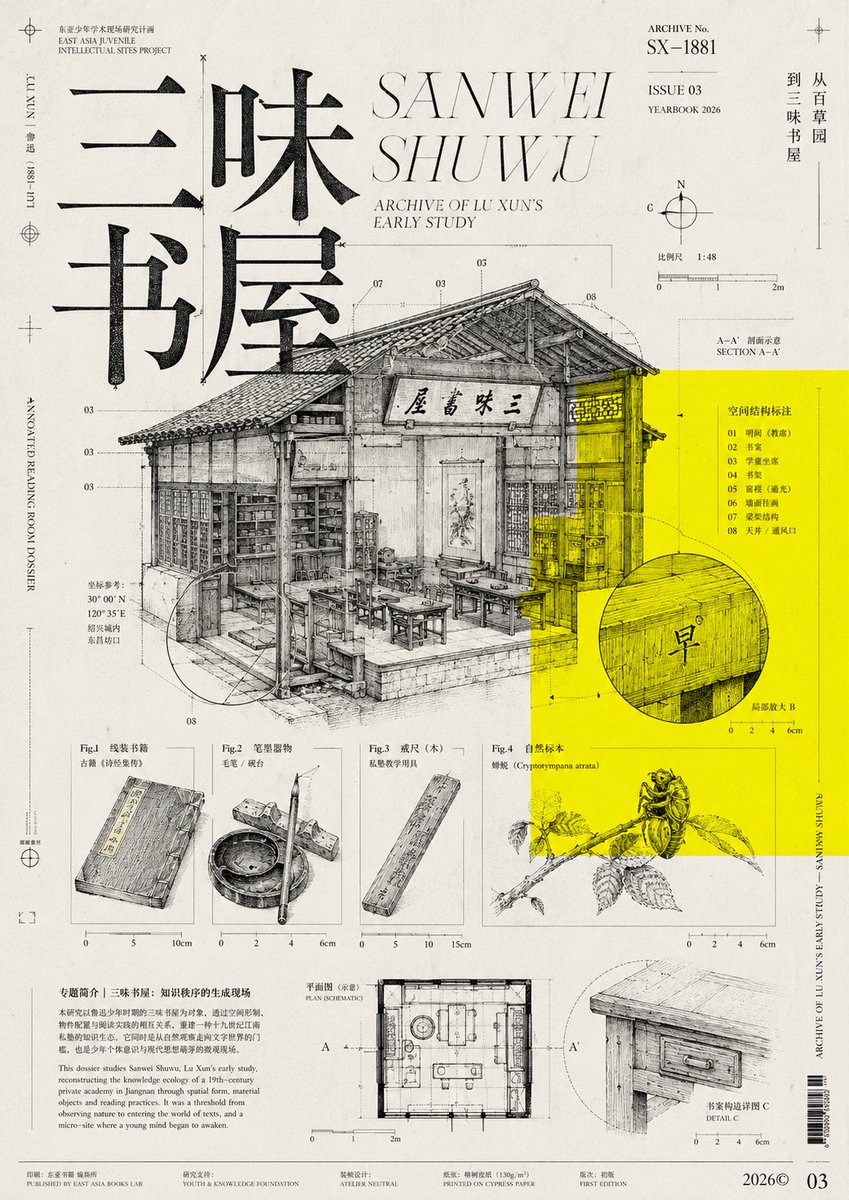
You are a senior graphic designer skilled in experimental publications, cultural magazine covers, and knowledge posters. Around the 【CREATIVE THEME】 given at the end of this prompt, design a vertical visual work with the temperament of "knowledge archive, scientific atlas, editorial design, and a fusion of Eastern typography with modernist layout." This is not an ordinary illustration, but a rigorously edited and information-planned magazine cover or cultural poster. The work should feel like a themed publication released by a fictional research institute, knowledge community, academic club, or independent publisher. ━━━━━━━━━━━━━━━━━━ I. Theme translation logic ━━━━━━━━━━━━━━━━━━ First analyze the core concept of the 【CREATIVE THEME】 and automatically extract: 1. One most representative "theme subject"; 2. Two to four secondary objects related to the theme; 3. One structure that can be dissected, disassembled, or annotated; 4. One symbolically meaningful natural object, organ, mechanical part, plant, insect, building, or historical artifact; 5. Several arrows, coordinates, scales, trajectories, connecting lines, numbers, and annotations that embody the theme's relationships. Do not depict the theme directly with conventional commercial photography. Translate the theme content into one or more of the following visual forms: scientific atlas, classical encyclopedia illustration, botanical chart, entomological specimen, human anatomy diagram, mechanical patent drawing, engineering structure diagram, astronomical orbit diagram, archaeological archive, medical illustration, geographic survey map, natural-history copperplate engraving, laboratory observation record, museum collection registration sheet. All image elements must have a conceptual connection to the 【CREATIVE THEME】 and must not be meaningless decoration. ━━━━━━━━━━━━━━━━━━ II. Overall layout ━━━━━━━━━━━━━━━━━━ The proportion is a vertical magazine cover or cultural poster, recommended 4:5, 3:4, or close to the A-series paper ratios. Use a rigorous but deliberately broken modernist editorial grid: - an asymmetric composition overall; - large areas of light gray-white negative space; - information concentrated in several zones of differing density; - some parts very crowded, some parts extremely empty; - elements need not all be centered or aligned; - some images, text, and lines cropped by the page edge; - let the image look like a knowledge archive still under research and editing; - keep "rational order" and "controlled chaos" coexisting. Add a striking fluorescent acid-yellow rectangular color block occupying about a quarter to a third of the image. The yellow block may be off-center, serving as a visual anchor. The main title, scientific images, and annotation lines may partly overlap the yellow block or cross its edges. Do not make the yellow block a three-dimensional object; do not use shadows, gradients, or highlights, only pure flat printing color. ━━━━━━━━━━━━━━━━━━ III. Type hierarchy ━━━━━━━━━━━━━━━━━━ Establish a strong editorial type hierarchy: 1. One gigantic Chinese main title; 2. One larger English serif or high-contrast italic English subtitle; 3. One issue number, year, chapter number, or archive number; 4. Several tiny Chinese and English annotations; 5. A little vertical text, edge text, page numbers, index, coordinates, or archive information; 6. Several short dashes, dotted lines, dividers, underlines, and section marks. The Chinese main title is generated directly from the 【CREATIVE THEME】, short and powerful, preferably two to eight characters. The main title uses a Chinese Song, Ming, or high-contrast serif with a book-like, literary, printed feel. Enormous size, may be cropped and overlap images, but must maintain clear visual dominance. The English text uses elegant, thin, high-contrast Didone-style serifs, classical italics, or editorial fonts. The auxiliary text may be very small, like research notes, publication info, footnotes, and atlas captions. Text serves compositional function first, reading function second. Do not use rounded cute fonts, techno-neon fonts, gaming fonts, cartoon fonts, or ordinary sans-serif commercial advertising fonts. When the generating model cannot write text accurately: - the main title keeps only the brief 【CREATIVE THEME】; - the remaining small text appears as a neat, credible typographic texture; - do not generate garbled large titles; - reserve clean areas for later typesetting. ━━━━━━━━━━━━━━━━━━ IV. Visual language ━━━━━━━━━━━━━━━━━━ The main image uses black monochrome line drawing, with the texture of 19th-century scientific atlases and natural-history copperplate engravings: - fine pen line work; - etching lines; - cross-hatching; - stippling; - woodcut or copperplate texture; - black-and-white scientific illustration; - old encyclopedia images; - anatomical structure; - precise but slightly aged printed lines. Choose the most important theme image as the subject, occupying a large area. Add another three to six smaller auxiliary images, for example: - locally enlarged structure; - cross-section diagram; - movement trajectory; - specimen figure; - detail parts; - microscopic structure; - different growth stages; - different observation angles; - conceptual relationship schematic; - symbolic creature or organ. Between images, establish relationships with extremely fine indicator lines, arrows, circular markers, scale bars, coordinate lines, and numbering. You may add a small amount of: - handwritten marks; - researcher annotations; - circles; - cross registration marks; - crop marks; - measurement lines; - specimen numbers; - geometric guide lines; - musical score or statistical waveform; - fictional publishing mark. But do not pile up irrelevant decoration. Every visual symbol should reinforce the feeling of "research, observation, classification, connection, and thinking." ━━━━━━━━━━━━━━━━━━ V. Color system ━━━━━━━━━━━━━━━━━━ Strictly limit the colors: - background: light gray-white with slight paper texture or old book-paper white; - main color: pure black; - accent color: high-brightness fluorescent yellow, acid lemon yellow, or printing yellow; - auxiliary color: a minimal amount of neutral gray. No other obvious color appears in the image. Black occupies the main part of the visual information, and yellow serves only as a strong, restrained visual signal. Avoid gold, orange, blue, red, purple, and multicolored gradients. ━━━━━━━━━━━━━━━━━━ VI. Printing and material ━━━━━━━━━━━━━━━━━━ Give the work the printing tactility of a real independent publication: - slight paper fibers; - slight copier noise; - uneven ink; - registration error; - halftone grain; - locally heavier ink; - tiny scratches; - edge trim marks; - old archive scan feel; - some stains; - faint creases; - offset or screen-printing texture. The texture must be restrained; do not make a severely damaged vintage poster, and do not cover the main information. The image stays flat, paper-like, editorial, without creating real three-dimensional space. ━━━━━━━━━━━━━━━━━━ VII. Visual temperament ━━━━━━━━━━━━━━━━━━ The final work should simultaneously have these traits: rational, experimental, academic, literary, avant-garde, quiet, austere, precise, mysterious, high in knowledge density, with the air of an independent publication. It should be like: - the cover of a themed magazine about unknown knowledge; - a scientific research archive edited by a designer; - the annual visual of a knowledge community; - an exhibition poster with both academic and artistic character; - a page of an experimental book enlarged into a poster. The work should give the viewer the feeling that it is "worth approaching to read and study," rather than a commercial ad seen at a glance. ━━━━━━━━━━━━━━━━━━ VIII. Composition details ━━━━━━━━━━━━━━━━━━ Realize the following relationships in the image: - the gigantic Chinese title overlaps and interlocks with the scientific illustration; - the English title is placed at the top or upper-middle, forming a scale contrast with the Chinese title; - the fluorescent yellow area carries part of the main title, atlas, or annotations; - one theme-subject image spans two layout zones; - one to two auxiliary images cropped by the page edge; - very small publication information at the page edge; - fine lines extend from the subject to a local enlargement; - at least one circular registration mark or local enlargement marker; - at least one set of small images arranged like an academic index; - add a paragraph of tiny-size feature introduction at the bottom or side; - keep enough negative space, do not fill the entire image. The composition looks free, but all elements must be controlled by an invisible grid. ━━━━━━━━━━━━━━━━━━ IX. Originality constraint ━━━━━━━━━━━━━━━━━━ Draw only on this type of visual method: "black-and-white scientific atlas, fluorescent yellow, experimental editorial layout, giant Chinese and English text, knowledge-archive collage." Do not copy from any existing work the specific: - title content; - illustration objects; - image positions; - shape and position of the yellow area; - page numbering; - logo; - font combination; - text arrangement; - composition proportion; - cropping method. You must rebuild the visual metaphor, image system, and layout structure based on this 【CREATIVE THEME】. The final work should look like a new work born from the same design culture, not a reproduction of a single reference image. ━━━━━━━━━━━━━━━━━━ X. Prohibitions ━━━━━━━━━━━━━━━━━━ Forbidden: realistic commercial photography, movie-poster feel, advertising models, 3D rendering, three-dimensional text, glass material, metallic texture, neon lights, cyberpunk, soft gradients, heavy shadows, lens flare, dreamy light effects, cartoon illustration, cute style, children's picture-book style, anime style, minimalist logo poster, corporate promotional page, templated infographic, centered symmetric composition, full-bleed photo, excessive vintage, severe yellowing, rich colors, meaningless decoration, messy scribbles, low-resolution line art, crude AI garble, direct copying of the reference work. ━━━━━━━━━━━━━━━━━━ XI. Final output requirements ━━━━━━━━━━━━━━━━━━ Output a vertical experimental magazine cover or cultural poster of extremely high completion. The image must have: a gigantic Chinese serif title, an elegant English italic or serif title, a black-and-white scientific atlas, a theme-related structure diagram, a flat fluorescent-yellow color block, fine annotation lines, tiny publication text, an asymmetric grid, partial cropping, large areas of white space, and old-archive printing grain. The whole should have precise details, rich layers, mature layout, and real printing feel, with the completion of an entry for international design awards. 【CREATIVE THEME】:xxx