
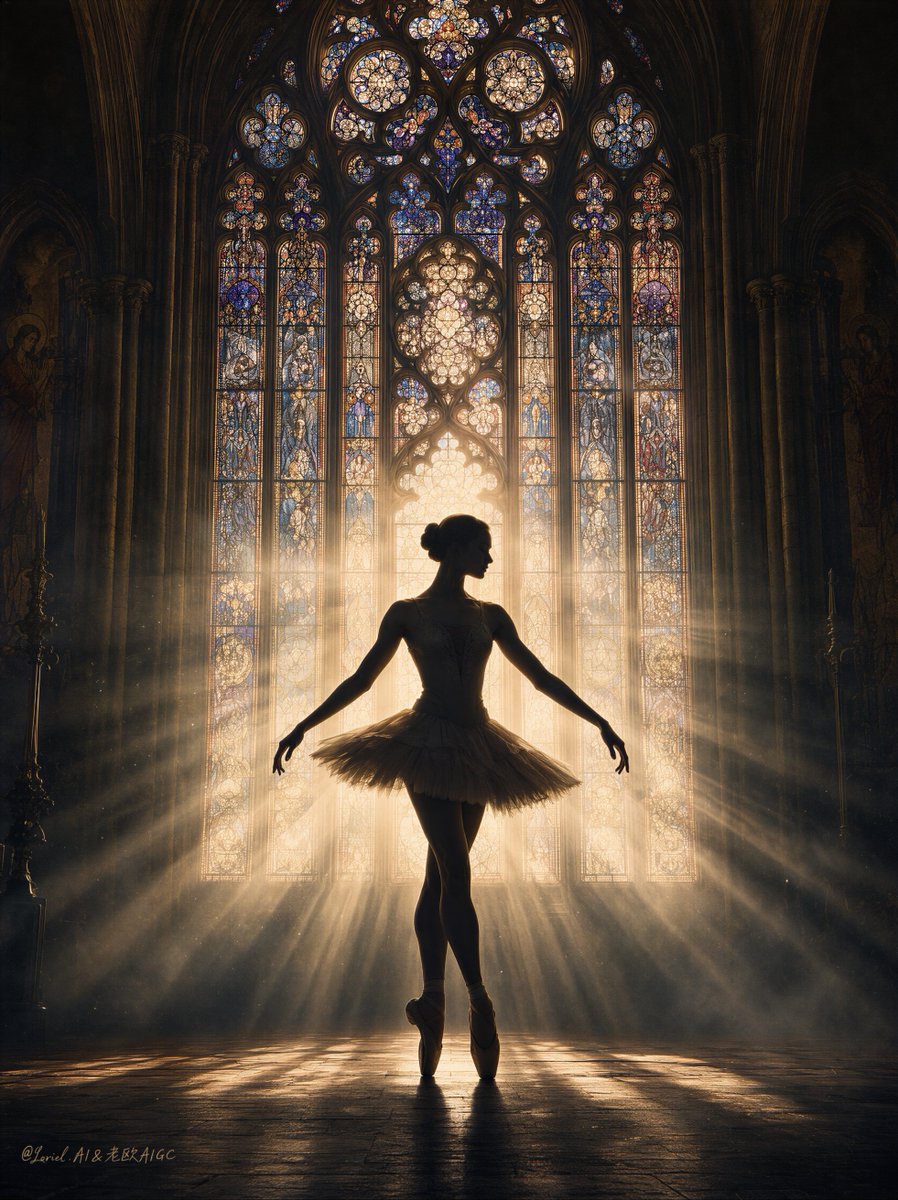
Create an ultra-premium cinematic portrait illustration that fully preserves the exact visual logic, atmosphere, and compositional structure of a grand backlit cathedral scene: a solitary female ballet dancer stands centered in front of a towering Gothic stained-glass window, with powerful radiant light streaming through the glass behind her, turning her figure into a dark elegant silhouette held inside a sacred atmosphere of dust, haze, and luminous beams. The image must feel realistic, ethereal, solemn, and emotionally breathtaking. The dancer must remain mostly in soft shadow, with only subtle edge light and faint body shaping visible. No visible text, no logo, no title, no typography of any kind. Core composition: Use a strict vertical composition with strong symmetry and monumental stillness. The dancer must stand in the exact center foreground, full body visible, aligned with the middle axis of the stained-glass window behind her. The towering Gothic window occupies most of the upper frame, while the dancer anchors the lower center. Light rays must radiate outward from behind her body in a halo-like fan, filling the cathedral space with depth and sacred drama. The architecture on both sides should frame the scene quietly, reinforcing the sense of height and reverence. Milk Cloud Orbit + Cream Halo Transit direction: Push the strongest existing qualities further: intensify the purity of the dancer's dark silhouette, strengthen the concentration and elegance of the backlight behind her, and make the volumetric beams more layered, visible, and emotionally resonant. Keep the exact same structural skeleton, but enrich the stained-glass window with deeper, older, more intricate Gothic patterning and slightly darker jewel-tone richness, so the cathedral feels more ancient and more sacred. The final result should feel calmer, holier, more atmospheric, and more collector-grade, like a rare illuminated vision inside an old cathedral. Main subject: Show a healthy athletic Western female ballet dancer with a refined elongated body, elegant neck, controlled posture, and quiet stage presence. She stands en pointe or in a poised ballet stance, body relaxed yet disciplined, with arms held softly and naturally. Her face must not be clearly readable; she should feel like a near-silhouette held inside the backlight. The mood comes from posture, proportion, and the relationship to light, not facial expression. Shadow and silhouette logic: The dancer must remain mostly in very soft dark shadow, with only minimal reflected light shaping the shoulders, waist, arms, legs, and ballet costume contours. Do not overlight the face or body. The figure should feel like a dark living sculpture suspended between visibility and mystery. Her silhouette must be elegant, clean, and emotionally magnetic, never flat and never fully blacked out. The edge light around her outline should feel slightly more refined and sacred, never theatrical. Costume: Use a refined ballet costume with a realistic bodice and delicate tutu or skirt structure, rendered with subtle texture and premium material realism. Ballet slippers and ribbons should be visible in the lower frame. The costume must remain understated and elegant, supporting the sacred cinematic tone rather than becoming decorative. Window and architecture: The towering stained-glass window behind the dancer must be richly detailed, luminous, and cathedral-grade, with more intricate circular and floral Gothic tracery, layered old-world craftsmanship, and darker jewel-tone depth. The glass should glow from behind with controlled blues, golds, reds, violets, and pale white highlights, but remain harmonious, aged, and reverent rather than bright or gaudy. The surrounding architecture must feel dark, monumental, and ancient, with columns, arches, and shadowed stone details barely visible at the sides. Light and volumetric atmosphere: The main visual force is the backlight. Use extremely delicate, realistic backlighting pouring through the stained glass and radiating into the space in soft, layered volumetric beams. The light must be strongest directly behind the dancer and spread outward through suspended dust, smoke, and haze. The beams should feel physically believable, soft-edged, sacred, and slightly denser than before, with more visible depth through the air. Use drifting smoke-like haze, fine dust motes, faint floating particles, and subtle luminous air density to make the rays visible and cinematic. Fantasy element logic: Introduce a restrained fantasy atmosphere through the interaction of light, dust, smoke, and sacred space. The fantasy should come from how the luminous beams, stained glass, and atmospheric particles harmonize around the dancer, creating a feeling of divine wonder without adding random magical objects. Keep the effect elegant, reverent, and believable. No loud fantasy effects. The wonder must come from light and air. Lighting and mood: Use extremely delicate soft backlight with exquisite tonal transitions. The brightest area must come from the window center behind the dancer, creating radiant halo pressure while leaving the figure itself in graceful shadow. Allow subtle reflected floor light and faint edge illumination on the dancer's form. The mood must be solemn, sacred, quiet, emotionally elevated, and cinematic, with a sense of mystery and transcendence. Floor and grounding: Show a cathedral stone floor or smooth worn floor plane catching soft pools of light and shadow from the window beams. The lower area should help ground the dancer while preserving the dramatic upward pull of the composition. Keep the floor elegant, minimal, and lightly reflective only where natural. Style: Highly detailed cinematic realism with painterly polish. The image must feel like a collector-grade sacred visual artwork, balancing realism and fantasy through atmosphere rather than stylization. The rendering must be soft yet razor-sharp where needed, with realistic materials, refined anatomy, and emotionally controlled grandeur. Print grain and sharpness: Apply a strong heavy archival print-grain treatment across the full image. The artwork must feel like a rare oversized collector print with dense analog grain, visible paper tooth, subtle scan texture, and tactile surface richness. The grain should be visible in the luminous haze, darker architectural shadows, and soft transitions, but must never reduce the sharpness of the dancer's silhouette edges, stained-glass detail, floor light shapes, and major light-beam contours. Preserve extremely sharp detail in all key edges. Color direction: Use a restrained sacred palette of deep charcoal shadow, soft black, pale gold-white light, aged jewel-tone stained glass, smoky blue-gray haze, muted violet, deep crimson accents, and warm ivory highlights. Keep the colors rich but controlled, elegant, old, and reverent, never flashy. Mood: sacred, solemn, cinematic, quiet, reverent, luminous, mysterious, graceful, emotionally elevated, collector-grade Negative prompt: visible text, logo, title, watermark, letters, numbers, typography, readable symbols, fully lit face, bright frontal lighting, cartoon ballerina, childish fantasy effects, low-detail stained glass, plastic costume, bad anatomy, extra limbs, messy composition, oversaturated colors, cheap glow effects, flat lighting, modern church interior, cluttered background