
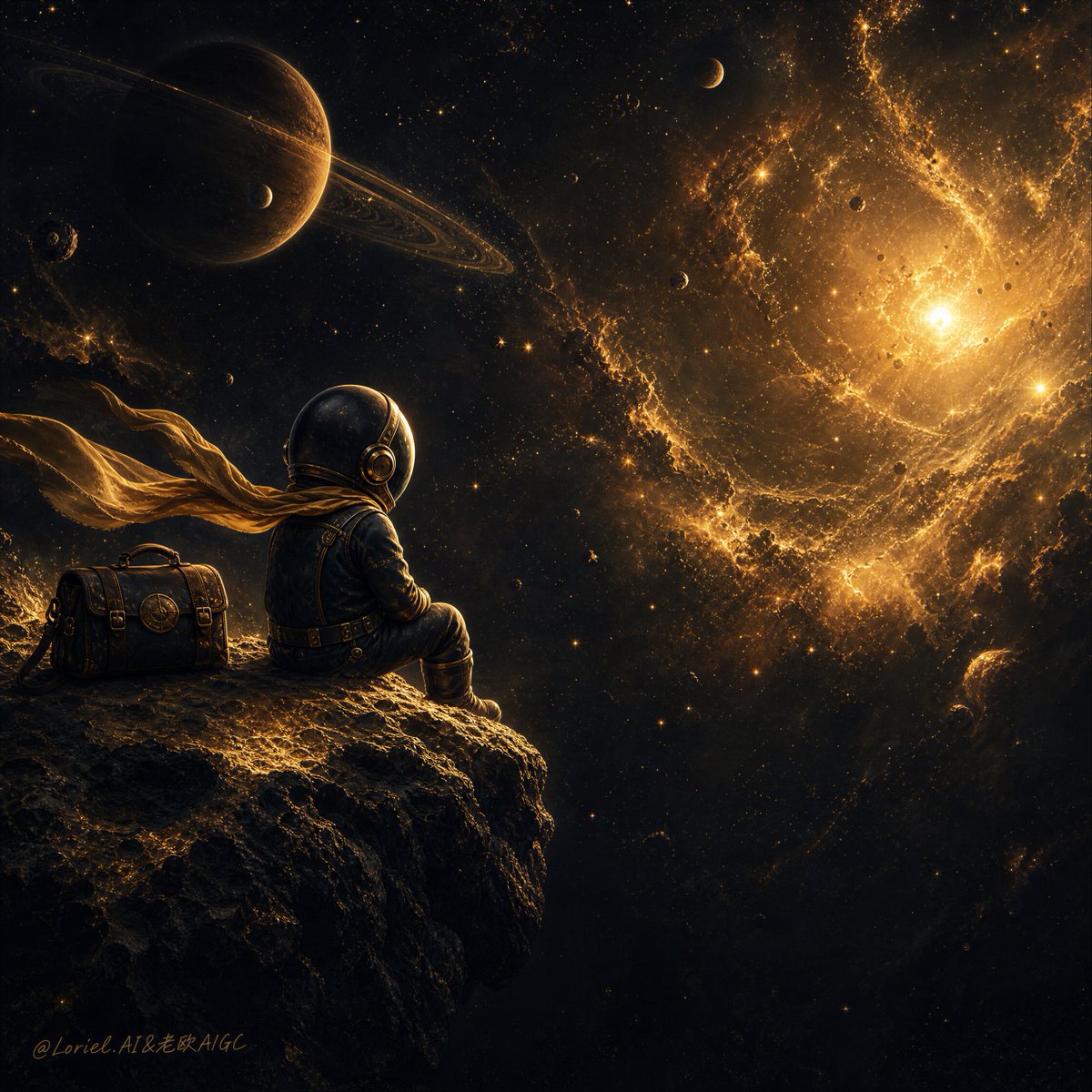
Create an ultra-premium cinematic storybook space illustration that feels like a direct same-series continuation of an existing black-and-gold cosmic child-astronaut poster, with absolute consistency in composition logic, visual language, lighting behavior, fantasy atmosphere, and collectible print mood. The image must preserve the exact same core structure: a tiny childlike astronaut standing front-facing on the top of a cratered moonlike asteroid in the lower center of a tall vertical 2:3 frame, surrounded by a monumental cosmic environment with glowing ring geometry, drifting nebula light, scattered planets, warm golden celestial dust, and immense black negative space. The final artwork must feel like a sister image from the same series, not a new style. No visible text, no logo, no title, no symbols, no typography, no watermark. Core composition: Use a strict centered poster composition. A small fictional child astronaut stands on the rounded top of a cratered asteroid or moon in the lower third of the frame, facing directly forward. The body must feel symmetrical and iconic, with monumental stillness. Behind the astronaut, place a large thin glowing circular orbit ring or halo structure, centered on the figure, creating the same sacred cosmic framing logic as the original series. Preserve vast dark negative space around the figure, especially in the upper half and side areas, so the character feels tiny against an immense universe. Keep the child astronaut, planets, negative space, and the luminous backlight source all locked in the same compositional relationship. Milk Cloud Orbit + Cream Halo Transit direction: Preserve the strongest emotional structure exactly: tiny astronaut, monumental asteroid, ringed planet, huge negative space, and the glowing backlight behind the figure. Keep the composition locked, but deepen the overall black-and-gold tonality so the artwork feels darker, richer, heavier, and more collector-grade. Replace part of the lighter sparkle logic with more refined smoke-like nebula flow, denser shadow atmosphere, subtler ember particles, and more elegant layered halo energy. The fantasy effects must feel more velvety, more restrained, and more premium, as if the image lives inside deep black silence pierced by antique gold light. Main subject: A small childlike astronaut character with a premium fantasy-storybook design. The suit must be dark navy-black to charcoal-black, with warm bronze-gold trim, stitched leather-like paneling, reinforced gloves and boots, tiny straps, buckles, and subtle handcrafted explorer detailing. The helmet must be large, round, glossy, and reflective, with amber-gold metallic rings and a dark faceplate that does not reveal a human face. The figure should feel adorable but dignified, iconic but not cartoonish, standing calmly with arms relaxed at the sides. A warm golden scarf should flow softly to one side in low gravity, matching the same-series logic. Series consistency: The image must feel 100 percent consistent with the original series in structure, mood, palette, subject scale, and fantasy logic. Preserve the same black-and-gold universe, the same lonely child-explorer tone, the same centered heroic stillness, the same ringed celestial framing, the same soft gold backlight, the same premium storybook realism, and the same emotional contrast between tiny explorer and infinite cosmos. This is not a redesign. It is a same-series reinforcement image with stronger detail, deeper atmosphere, and darker print richness. Environment: Build a vast deep-space fantasy landscape filled with elegant black cosmic depth, orange-gold nebula currents, drifting smoke-like stardust, small planets, distant moons, faint meteor fragments, and glowing particulate trails. The upper background should contain several celestial bodies placed with careful balance, including one larger planet and a few smaller moons, all softly rim-lit and integrated into the same black-gold world. Preserve the feeling of a giant cosmic horizon behind the astronaut, with luminous cloud bands and fantasy-grade celestial dust forming a soft arc through the frame. Keep all planets and celestial placements restrained, quiet, and series-consistent. Fantasy element logic: Strengthen the fantasy atmosphere with highly controlled fluid-like cosmic effects, smoke dust, ember-like particles, delicate star-fire sparks, and luminous golden nebula ribbons. These elements must feel deeply integrated and elegant, not noisy. Use restrained arcs of glowing dust, suspended ash-like particles, slow drifting smoky layers, subtle particle fireworks, and soft radiant turbulence around the ring halo and distant cosmic bands. Reduce bright sparkle and instead emphasize deeper shadow haze, darker gold ignition points, and softer layered smoke. The effects must support the figure and composition, not overpower them. Asteroid detail: The foreground moonlike asteroid must be rugged, cratered, rocky, and heavily textured, with sharp tactile detail. Show rounded crater openings, fractured mineral surfaces, dusty ridges, and dark recesses. The top edge and lit surfaces should catch warm gold light, while the craters fall into deeper black shadow. The surface must feel physical, heavy, ancient, and print-sharp. Lighting and mood: Use extremely delicate soft cinematic lighting. The primary light should come from behind the astronaut, creating a warm golden cosmic glow that outlines the helmet, scarf, shoulders, gloves, and boots with soft amber rim light. Let the rest of the frame fall into deeper black, charcoal, and muted bronze shadow than before. Use gentle bloom around the backlight and brightest celestial bodies, subtle volumetric dust, and rich tonal transitions. The mood must be quiet, lonely, hopeful, adventurous, magical, emotionally restrained, and more nocturnal in its black-gold depth. Style: Highly detailed cinematic digital illustration with storybook realism. The style must be painterly but polished, with realistic material rendering on the suit, helmet, scarf, asteroid, and cosmic environment. The image must feel like a premium illustrated collector poster: magical but restrained, fantastical but believable, adorable but not childish, emotional but not sentimental. No comedy tone, no simplified cartoon look. Print grain and sharpness: Apply a strong heavy archival print-grain treatment across the entire artwork. The image must feel like a rare oversized collector print with dense analog grain, visible paper tooth, subtle scan texture, and tactile print richness. The grain should be especially visible in the black sky, smoky nebula zones, and shadow transitions, but must never reduce the sharpness of the astronaut silhouette, helmet rim, scarf edge, asteroid craters, and key illuminated particles. Preserve extremely sharp detail in all major edges and textures. Color direction: Deepen the overall palette into a darker black-and-gold system: rich black, deep navy-black, charcoal, muted bronze, antique gold, dim amber, burnt orange-gold nebula glow, and only very restrained cool dark space undertones. The image must feel darker, heavier, more elegant, more print-rich, and more unified than a brighter fantasy poster. Avoid bright yellows, neon gold, bright blue sci-fi tones, or excessive cosmic color noise. Negative prompt: visible text, title, logo, watermark, caption, slogan, letters, numbers, typography, readable words, brand mark, modern nasa design, adult astronaut face visible, photorealistic human face, childish cartoon style, comedy mood, flat vector art, low detail, blurry stars, muddy nebula, oversaturated colors, bright neon gold, plastic suit, distorted helmet, bad anatomy, extra limbs, duplicated astronaut, cropped main subject, chaotic explosion, noisy particles, empty plain background