
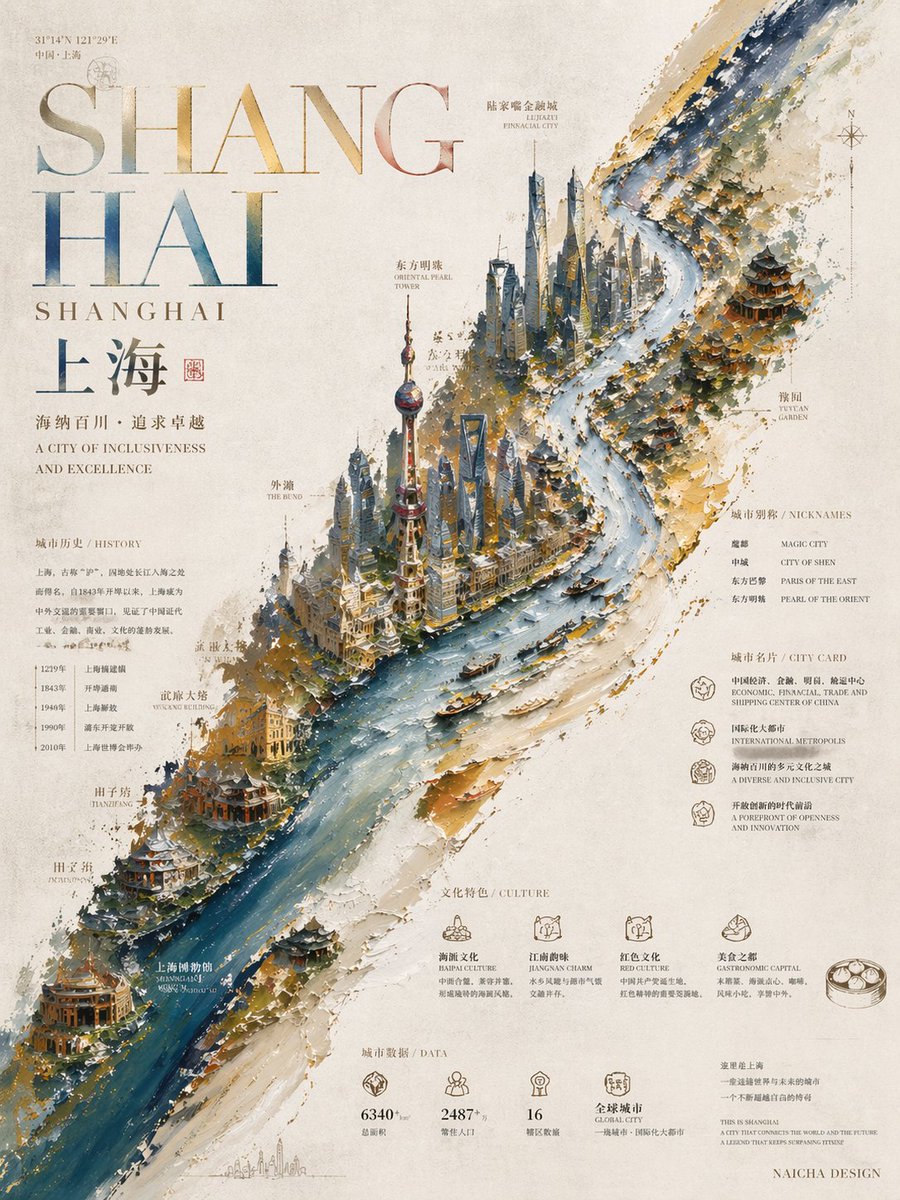
Create a high-completion visual work with collection value, designer poster aura, and authorial aesthetic. Overall style: oil painting + master-level typography design. The image must have an obvious impasto texture, using thickness differences to create three-dimensionality, material feel, rhythm, and visual layers, combining painterly texture with modern design and exhibition-grade poster aura. I. Core composition logic Centered but slightly offset diagonal main composition. The core visual subject of the entire poster is not a small cluster in the middle, but an irregular comprehensive color band / graphic bearing area that unfolds widely along the diagonal. This color band must extend naturally from one diagonal direction to another, forming a diagonal visual framework that runs through the page, with sufficient length, area, tension, and layout command. It must be expansive, grand, complete, not cramped, not shrunk into a lump in the middle, and not making the layout feel narrow or constrained. This comprehensive color band is both like a main brushstroke swept across by thick oil paint, and like an extracted thematic landscape, information zone, cultural slice, or visual vehicle. The color scheme of the band cannot be fixed; it must be automatically determined based on the user's final input [City / Theme / Object / Inspiration]. 2-3 main colors can be extracted from the most typical impression colors, cultural colors, environmental colors, architectural colors, and emotional colors of the theme, forming a high-level and layered comprehensive color relationship. For example, it can present color logic like "purple-gold-blue," "ocre-red-green," "dark green-gold," "gray-pink-brown," but the specific colors must intelligently adapt to the input content itself, not a fixed template. II. Main content generation logic On top of this comprehensive color band along the diagonal, carry the core visual content strongly related to the user's input. If the input is a city: Automatically extract the city's most recognizable landmarks, buildings, famous sites, waterways, human spaces, historical symbols, urban memories, representative cultural elements, etc. If the input is an object, theme, or inspiration: Automatically extract the most representative core elements, key scenes, symbols, structural information, cultural clues, conceptual images, or visual motifs. This content should not be realistically piled up, nor resemble a tourism promotional page material collage, nor be listed in a disorderly manner. It must be integrated as a "minimalist top view / highly summarized graphic bird's-eye view / design-oriented map-like composition / informational landscape." Make them appear compressed, extracted, and embedded within this diagonal comprehensive color band, forming a unified, restrained, continuous, and orderly main graphic system. The graphic area must have continuity, fluidity, and integrity, with different elements naturally unfolding, connecting, transitioning, and echoing along the diagonal direction, creating a visual scroll-like feel. Do not compress the middle and leave the ends empty, do not break the main subject, and do not contract the visual focus into a local part. III. Background and white space The background should be uniformly off-white, warm white, or a textured paper background with a slight aged paper feel. The paper surface should have natural paper fiber feel, fine graininess, and a slight handmade or high-quality printing paper texture. The overall background must be clean, restrained, and quiet, without excessive decoration or complex patterns interfering with the main subject. Large areas of white space must be preserved, but this white space is not empty and powerless; it serves the high-level white space of the diagonal main structure. White space should make the main subject more prominent and also give the typography sufficient breathing room, sense of space, exhibition feel, and layout tension. IV. Text system and layout logic The text system must be an important part of the entire poster, not explanatory text pasted on afterwards. The overall text should use a serif system, reflecting a master-level typography effect that is high-end, restrained, classic, and has both cultural and design sensibility. There must be a clear hierarchy between the title, main copy, sub-copy, knowledge points, small annotations, and explanatory small text, achieved through font size, density, staggered placement, alignment, white space, grouping, and echoing to create a true layout rhythm. Layout priority must be clear: The comprehensive color band / graphic subject expanding widely along the diagonal is the first visual framework and main narrative channel of the entire poster, with priority over ordinary text layout. This diagonal subject must remain continuous, complete, expansive, and unbroken. All large titles, pinyin / English large lettering, knowledge modules, decorative copy, and explanatory text must obey the integrity of this diagonal subject. It must not be cut horizontally in the middle, interrupted at the waist, or have its most critical continuous area clearly obscured or split. A complete, clear, and continuous visual channel must be reserved for the diagonal subject. The text system should be mainly distributed in the white space areas on both sides of the subject, the four corner white spaces, the edge layout areas, or arranged along the edge of the subject, not brutally pressed into the center of the subject. If a small amount of text is needed inside the subject, it should only be very small, low-interference, embedded annotations, such as local names, landmark annotations, small labels, etc., and must be naturally embedded within the subject's internal structure, not forming a large cross-sectional layout. V. Material and color of pinyin / English large lettering The poster must include a "pinyin / English large title" as one of the core visual texts. If the user inputs a Chinese city, Chinese theme, or Chinese object, automatically extract its pinyin as the large title; If the input content is more suitable for English expression, a corresponding English large title can also be automatically generated. This large title must have an obvious hot stamping texture, metallic material feel, foil stamping or embossing feel, presenting a high-end, delicate, restrained material effect with printing craftsmanship beauty. It can have slight reflection, indentation feel, relief feel, foil surface texture, paper hot stamping texture, but must not be vulgar, cheap, excessively shiny, or appear overly commercial. The color scheme of this material large lettering cannot be locked into a single pure gold. It must be automatically determined based on the user's input [City / Theme / Object / Inspiration], flexibly selecting a more suitable material color scheme to avoid the image appearing stiff, rigid, or monotonous in this part. One of the following two flexible options can be used: Option 1: Uniform single color Choose one material color that best represents the aura of the city / theme. This color can be gold, antique gold, copper gold, champagne gold, rose gold, silver, platinum, ink gold, etc.; it can also be other colors with a metallic material feel, such as metallic blue, metallic green, metallic purple, metallic red, gray silver blue, bronze green, warm brown gold, ink black metallic, etc. The point is not "must be gold," but "having a high-level material language." Option 2: Comprehensive color combination Use 2-3 mutually coordinated colors for a comprehensive color combination. These colors can come from the main tones, impression colors, architectural colors, natural colors, cultural colors, or emotional colors of the city / theme, and are presented through color foil stamping, different color foil stamping, local different color, comprehensive color metallic layers, etc. This comprehensive color scheme must be high-end, restrained, and designed, not a cheap gradient, not flashy, and not damaging the overall aura. Regardless of whether the single-color or comprehensive color scheme is used, the pinyin / English large lettering must have a "hot stamping feel" in material, a "thematic feel" in color, "flexibility" in visual, and form a unified relationship with the diagonal subject and the overall layout. This pinyin / English large lettering cannot exist in isolation, nor can it be inserted horizontally into the center of the diagonal subject, cutting it off. It should serve as the layout fulcrum of the entire poster, placed in the white space area, on the outer edge of the subject, in the edge layout area, or unfolding along the overall layout airflow, forming an echoing relationship and layout tension with the subject. If both a Chinese title and pinyin / English large lettering appear, a clear and high-level hierarchical relationship must be formed: The pinyin / English large lettering can serve as the main visual title; The Chinese title can serve as an echoing title, subtitle, or auxiliary layout element; Both must be carefully arranged and never simply stacked vertically. VI. Surrounding information and knowledge points The surrounding content cannot be empty; it must automatically supplement information with "highlights, knowledge points, and reading value" around the theme. This content is automatically determined by the model based on the user's final input and does not need to be additionally provided by the user. If it is a city direction: Automatically supplement the city's related nicknames, historical positioning, cultural labels, geographical features, representative buildings, landmark annotations, human highlights, city spirit, typical symbols, concise knowledge points, etc. If it is an object direction: Automatically supplement its function, material, structure, origin, use, cultural background, representative features, technical points, etc. If it is an abstract theme or inspiration direction: Automatically supplement its concept extraction, style keywords, symbolic meaning, background knowledge, extensibility highlights, association clues, etc. These knowledge points should not be mechanically listed like a manual, nor crammed into every corner. They must be split, grouped, interspersed, integrated, and arranged in a design-oriented way, becoming part of the image. They should be naturally distributed in the surrounding white space areas around the diagonal subject, forming a layout structure that is both informative and decorative. The surrounding information should adopt an "evasive layout," naturally unfolding around the edge of the subject, forming an encircling, accompanying, and supplementary relationship, not invading the subject's central channel. There should be density variation and breathing space between information blocks, being rich but not cramped. VII. Credit Retain a very small signature in the lower right corner of the image: "NAICHA DESIGN" The signature font should be restrained, clean, and low-key, not stealing the spotlight. VIII. Overall aura goal The entire poster should present the following comprehensive feel: Subject expansive, layout open, diagonal main structure fully spread out; White space high-level with breathing space; Information rich but not cluttered; From a distance, has a clear main visual and strong memory points; Up close, has rich knowledge points and layout details; Combining painterliness, design, information, readability, and collectability; Like a high-end exhibition poster, city visual poster, design annual cover, or art book interior page level work. IX. Problems to avoid Do not shrink the middle graphic area into a lump; Do not make the subject area too small; Do not let the diagonal main graphic be cut in the waist by large text or information modules; Do not interrupt the middle of the subject with a title inserted horizontally; Do not let the pinyin / English large lettering break the subject like a roadblock; Do not make the layout feel narrow, cramped, or constrained; Do not have a template tourist promotional page feel; Do not have a low-level collage feel; Do not have a common map screenshot feel; Do not have an instruction manual layout; Do not have a cheap illustration feel; Do not fill the page with elements; Do not let the text become subsidiary description; Do not let the material large lettering look vulgar, rigid, monotonous, or overly commercial. X. Ultimate goal Let "the comprehensive color band subject expanding widely along the diagonal + minimalist top-down elements / graphic system + pinyin / English large lettering with hot stamping / metal material feel and flexible color + surrounding knowledge information + high-level serif typography + large areas of white space" together form a complete and high-level work. Ultimately let the entire image: From a distance, have a strong main visual impact, Up close, have rich reading content and design details, Subject unbroken, text unobstructed, layout grand, typography high-level, Overall having collection value, authorship, and master-level aesthetic completion. User final input: [City / Theme / Object / Inspiration]: _____ Size requirement: _____ (e.g., 3:4)