
Coldtea
Agentische Entwicklungsumgebung, die die Orchestrierung von Coding-Agents, visuelle QA-Tests und Produktionsmonitoring für die gesamte Software-Delivery vereint.
Community:
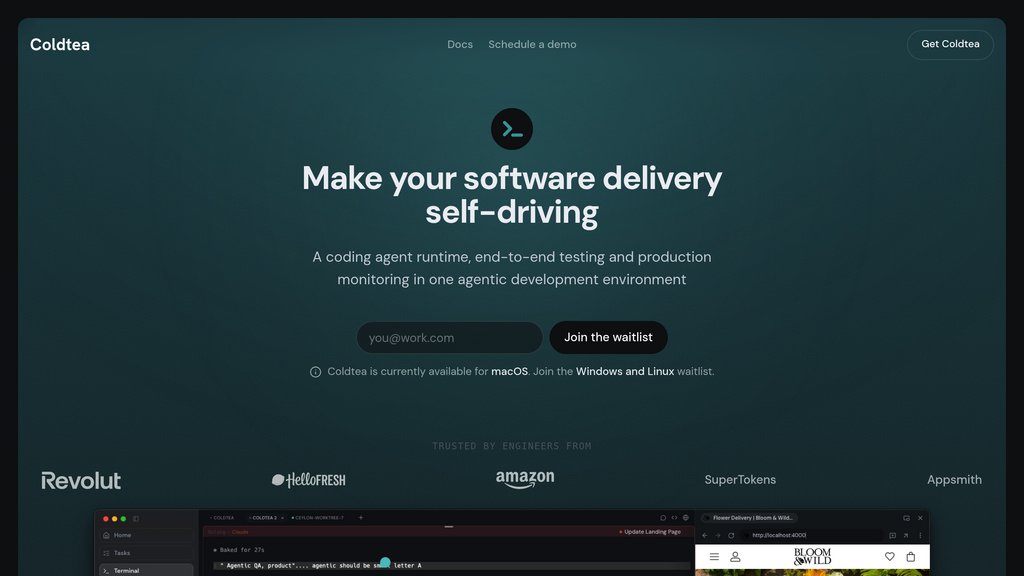


Produktübersicht
Was ist Coldtea?
Coldtea ist eine agentische Entwicklungsumgebung für Teams, die bereits auf Coding-Agents wie Claude Code, Codex, Gemini CLI und OpenCode setzen, um Software zu schreiben. Statt sich nur darauf zu konzentrieren, wie schnell Code geschrieben wird, deckt Coldtea den Rest des Delivery-Prozesses ab: ein gemeinsames Terminal zur Orchestrierung mehrerer Agents, visuelle QA-Agents, die in einfacher Sprache beschriebene Nutzerabläufe in selbstheilende Tests umwandeln, sowie Monitoring-Agents, die Produktionsprotokolle, Sitzungen und Feedback beobachten und Pull Requests mit untersuchten Fixes öffnen. Es läuft lokal direkt neben Ihrem Repository mit Ihrer eigenen Shell, Ihren Agents und Einstellungen, wobei Cloud-Ausführung nur bei expliziter Aktivierung genutzt wird, und synchronisiert Aufgaben mit Ihrem bestehenden Engineering-Board, sodass Hintergrund-Agents parallel arbeiten können, ohne Ihre Maschine zu blockieren.
Hauptfunktionen
Einheitliches Agent-Terminal
Orchestrieren Sie mehrere Coding-Agents wie Claude Code, Codex, Gemini CLI und OpenCode nebeneinander mit gemeinsamem Kontext, sodass sie gemeinsam planen, entwickeln und Code reviewen können, während Sie die Kontrolle behalten.
Agentische visuelle QA
Beschreiben Sie Web- und Mobile-Nutzerabläufe in einfacher Sprache und lassen Sie QA-Agents daraus selbstheilende Tests erstellen, die bei jeder PR-Preview laufen und Deployments automatisch absichern.
Selbststeuerndes Produktionsmonitoring
Dauerhaft aktive Monitoring-Agents durchsuchen Fehlerprotokolle, Kundenfeedback und Nutzersitzungen, diagnostizieren Probleme und öffnen Pull Requests mit bereits untersuchten Fixes statt roher Alarme.
Cloud-Taskausführung
Weisen Sie Engineering-Aufgaben Hintergrund-Agents zu, die auf gehosteten Maschinen laufen, führen Sie mehrere parallel aus und überprüfen Sie Pull-Request-Ergebnisse in einem einzigen Dashboard.
Bereinigung technischer Schulden
Agents durchsuchen die Codebasis fortlaufend nach technischen Schulden, die entstehen, wenn ein Großteil des Codes von Agents geschrieben wird, und tragen sie direkt in das Task-Board des Teams ein.
Local-First-Architektur
Läuft auf Ihrer eigenen Maschine direkt neben Ihrem Repository, mit Ihrer bestehenden Shell und Ihren Agent-Einstellungen, hält Code standardmäßig lokal und bietet optional Cloud-Ausführung an.
Anwendungsfälle
- KI-unterstützte Entwicklungsteams : Engineering-Teams, die mehrere Coding-Agents einsetzen, können ihre Arbeit koordinieren, Änderungen reviewen und Ergebnisse in einem gemeinsamen Arbeitsbereich synchron halten.
- Regressionstests bei Releases : QA- und Dev-Teams können End-to-End-Regressionstests bei jedem Pull Request automatisieren, ohne fehleranfällige Testskripte von Hand zu schreiben.
- Reaktion auf Produktionsvorfälle : Ops- und Engineering-Teams können Produktionsprobleme erkennen und diagnostizieren, bevor Nutzer sie melden, und so die Zeit bis zur Behebung verkürzen.
- Verteilte Engineering-Workflows : Teams können lang laufende oder parallelisierbare Aufgaben an Cloud-Agents auslagern, ohne die lokale Entwicklung zu beeinträchtigen.
- Management technischer Schulden : Teams, die große Mengen an agentengeneriertem Code ausliefern, können sich anhäufende technische Schulden automatisch verfolgen und priorisieren.
Häufig gestellte Fragen
Coldtea Alternativen

Emdash
Open-Source-Agent-Entwicklungsumgebung, die es Entwicklern ermöglicht, mehrere Coding-Agents parallel auszuführen, jeder isoliert in seinem eigenen Git-Worktree.

Clears
Autonome Software-Delivery-Plattform, die Engineering-Stories in geprüfte Pull Requests verwandelt.

bb
Local-first IDE zur Koordination von Coding-Agents, zum Erstellen individueller Workspace-Tools und zum Ausführen von Entwickler-Workflows.

Blaxel
Cloud-Infrastrukturplattform, die speziell für den Aufbau, die Bereitstellung und die Skalierung autonomer Agenten mit Serverless-Computing und speziellen Tools entwickelt wurde.

CodeLayer
Open-Source-IDE für die Orchestrierung paralleler AI-Coding-Agents mit erweitertem Kontext-Engineering zur Lösung komplexer Probleme in großen Codebasen.

E2B
Open-Source-Runtime, die sichere, skalierbare Codeausführung in isolierten Cloud-Sandboxes für AI-Anwendungen ermöglicht.

Morph
Hochleistungsplattform für schnelle, präzise Codeänderungen und Kontextmanagement.

Pydantic AI
Typsicheres Python-Framework für Agents mit strukturierten Ausgaben, Dependency Injection und Unterstützung für praktisch jeden großen LLM-Anbieter über eine einheitliche API.