
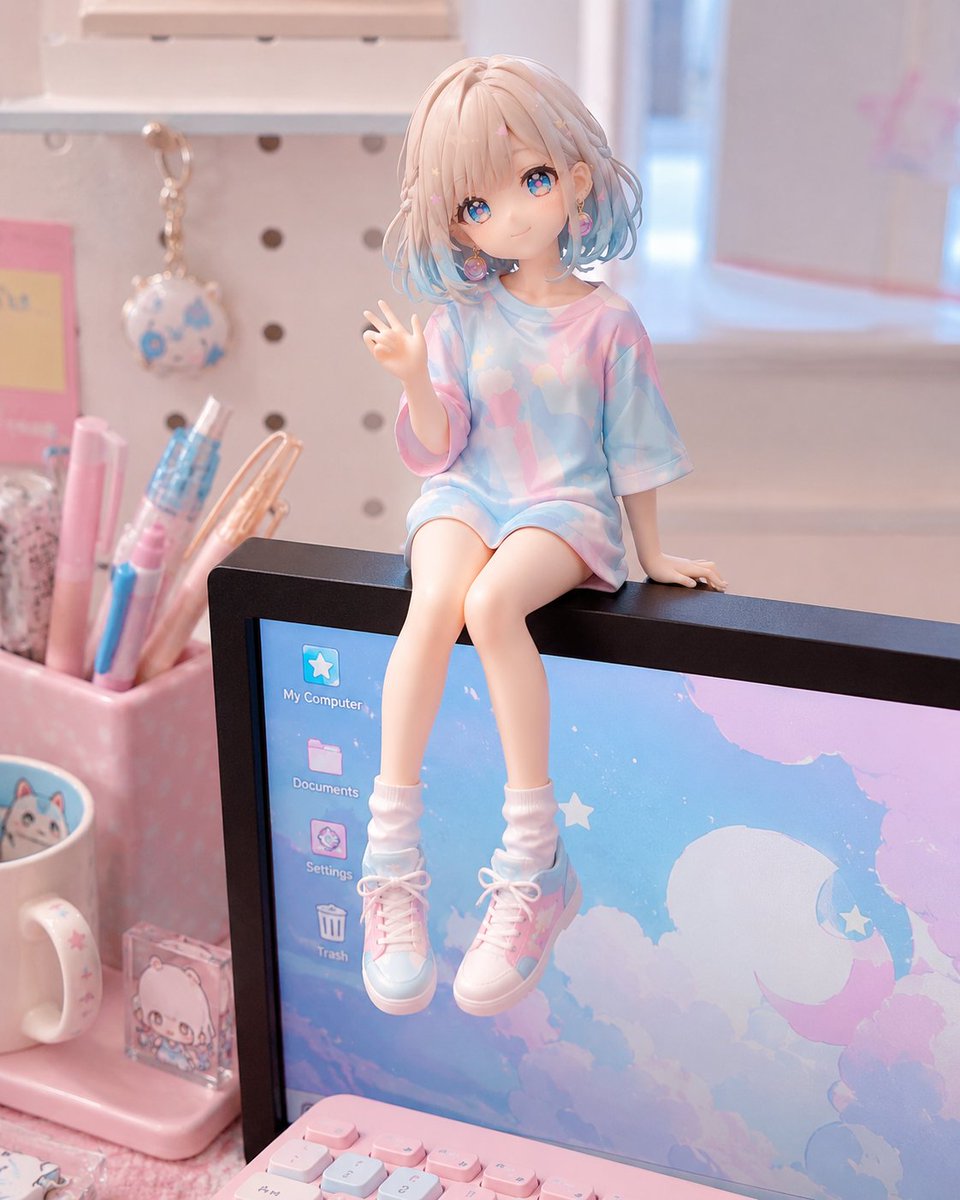
Using the attached character illustration as the most important reference, keep the face, eye impression, eye shape, hairstyle, hair color, bangs, contour, expression, sense of age, outfit, color palette, transparency, atmosphere, and the character's unique cuteness and beauty as faithful as possible. Then rebuild the scene as if that character had been turned into a real, existing "official desktop sitting figure," perched neatly on top of a computer monitor. This is not a mere illustration, nor the character at giant size on the desk. The key is that it looks like the original character became a finished miniature figure actually displayed on the monitor. Core conditions: never turn the character into someone else; prioritize keeping the face, eyes, hairstyle, hair color, bangs, expression, outfit, colors, and atmosphere; rebuild it as a real three-dimensional figure, not a flat illustration; give it the texture of a finished PVC/ABS trading figure, finely detailed; the form, texture, and presence of a real product, not just a shrunken human; sitting naturally on the top edge of the monitor with a solid sense of contact, not floating unnaturally; natural pose, center of gravity, hands, and finger count; size instantly readable; the cuteness of a small sitting figure perched on the edge. Staging: the figure sits on the top edge of the monitor, feet dangling forward or swinging lightly; a cute, gesture-filled sitting pose (swinging feet, propping one hand, chin on hand, waving, peeking at the screen). Around the desk, naturally place a keyboard, mouse, mug, stationery, and small items to give the sense it "really lives on the desk." The screen may faintly show a gentle wallpaper or work scene, but the star is the figure on top of the monitor. Composition: at a glance it should feel "my character became a figure and is sitting on the monitor!"; the figure exists in real space, not inside the screen; a natural photographic viewpoint clearly showing the relationship of desk, monitor, and figure; small but clearly the star; precise textures (hair flow, fabric wrinkles, paint, gloss, shadows); balancing cuteness, realism, product feel, and the urge to display it. Atmosphere: a cute, refined, slightly stylish desk space, bright and clean, with social-media-worthy polish; convincing as a "photo of official goods that don't exist" or a "product visual that looks like it's actually for sale"; it should make viewers think "I want it," "I want to do this with my character," "it's so cute, like it lives on the desk." Prohibitions: don't turn the character into someone else; don't make just a small human; don't let it float unnaturally; don't draw it as an ordinary anime character instead of a figure; don't break the face or eye impression; don't make fingers, feet, or joints unnatural; don't break the size ratio with monitor and desk; don't use only a white-background product cutout. Make clear the star is the character figure sitting on the monitor. Recommended result: ultra-high detail, cute, precise, realistic, product feel, social-media-ready, collectible appeal, vertical 4:5 format. Short core: "Keeping the original character faithful, turn it into a real, finished small PVC figure perched on the top of the monitor. Express it with a natural sense of contact, a cute sitting pose, a lived-in feel on the desk, small props, and product-grade polish that makes you want to buy it."