
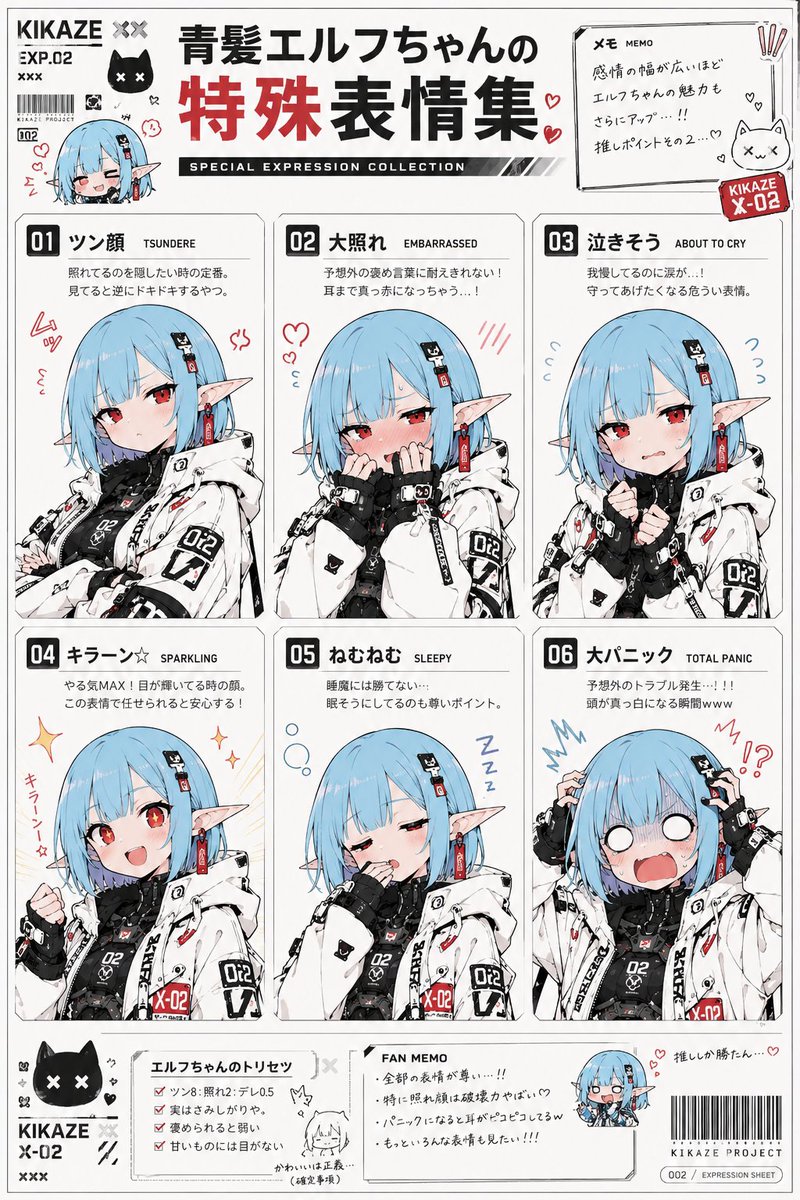
Use the reference image as the base for the character design. Accurately maintain the character's face, hairstyle, hair color, eyes, ears, outfit, silhouette, body proportions, and the mood of the expressions. Never break the character's identity. Draw a "Special Expression Collection of the character (insert name here if any)". Feature 6 types of special expressions on a single reference sheet. For each expression, add as design elements: ・Expression name (in Japanese) ・English spelling ・A small emotion description The overall design should have the atmosphere of: ・a moe anime culture fanbook ・an emotional-variation reference collection for otaku ・a subculture doujinshi ・character setting material White-based background. The accent color of the whole page should be naturally determined to match the character design, outfit, and world of the reference image. Use a color scheme that suits the character, creating a cohesive page design. Within the page, you may add: ・handwritten-style notes ・hearts ・sweat marks ・manga-style concentration lines ・emoticons ・internet-meme-style decorations ・deformed icons ・emotion symbols ・sticker-style decorations ・magazine-style typography Do not depict realistic human expressions, but rather those unique to moe anime culture: ・facial gags ・super-deformed style ・symbolic expression ・exaggerated reactions ・emotion templates For each expression, reflect the emotion not only in the face but also in the neck, shoulders, hands, and posture. Depict them as "moe anime culture facial templates" frequently used in anime, romantic comedies, social games, Vtuber culture, gag works, and slice-of-life works. Give the whole thing a finish like: "Moe Anime Expression Dictionary" "Emotional Reference Collection for Otaku" "Subculture Character Expression Encyclopedia".