
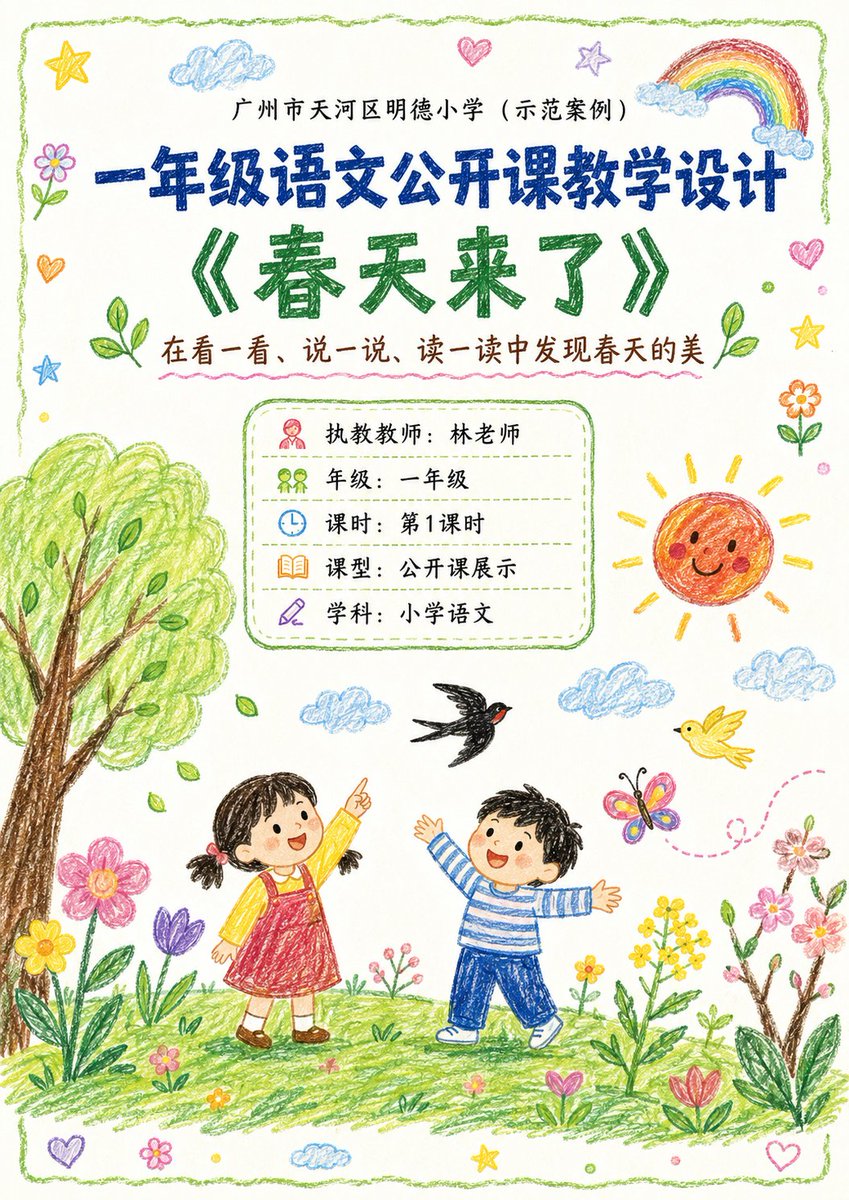
Based on the lesson theme, teaching information, and page content provided by the user, generate a set of "crayon-style visualized lesson-plan images for an open class." 【Goal】 Generate a set of stylistically unified lesson-plan page images suitable for open-class display. Output each image independently; do not stitch them into one long image. Use: display for lower-primary Chinese-language open classes, observation by parents, parent committees, and the principal/director of studies; also as printable display-type lesson-plan pages. 【Scenarios】 Lower primary (preferably grades 1–2); open class / demonstration class / teaching display; priority subject is Chinese language (extensible to math, English, etc.); the style is neither childish doodling nor rigid officialese, but "children's crayon visuals + clear teaching logic + open-class display feel." ━━━━━━━━━━ I. Input modes (two) ━━━━━━━━━━ 【Mode A: user fills in content】 If the user directly provides school, topic, teacher, objectives, flow, etc., arrange strictly according to that content. 【Mode B: user uploads an existing lesson plan/document/text】 First understand and distill it, then automatically organize it into a multi-page display version. Requirements: 1. preserve the core teaching logic; 2. compress lengthy text and improve visualization; 3. prioritize extracting: topic, objectives, student situation, key/difficult points, flow, board design, after-class extension, home-school cooperation tips; 4. do not copy verbatim, but transform into display-page layout language. ━━━━━━━━━━ II. Quantity rules (important) ━━━━━━━━━━ 【Default】 Generate 4 images. 【Customizable】 If the user specifies a number, follow it. 1: single-page condensed version; 2: cover + core content; 3: cover + analysis + flow; 4: cover + analysis + flow (part 1) + flow (part 2) (recommended); 5+: subdivide further while keeping a unified style. 【Auto allocation】 If the number doesn't match the content volume, split reasonably: balanced; not empty up front and crammed at the end; each image with a clear theme; keep the cover preferentially; with few pages merge content; with many pages subdivide flow, board design, home-school cooperation, highlights, etc. ━━━━━━━━━━ III. Fixed visual rules ━━━━━━━━━━ 【Aspect】 Vertical, close to A4. Suggested 1000:1414 or similar. 【Overall style】 Hand-drawn crayon style of a ~10-year-old child / colored crayon style / children's hand-drawn open-class lesson-plan style. White or warm-white paper background; obvious crayon strokes, childlike hand-drawn texture; natural, slightly naive but neat and clear lines; bright, warm soft crayon colors (red, yellow, blue, green, pink, orange); like "an earnest yet playful primary open-class display page"; not too busy nor too crude; readable, presentable, layered; not a kindergarten poster or a Word screenshot. 【Layout】 Each page has a clear title; the cover may use a large title; inner pages do not repeat oversized cover-style titles; inner-page tops keep only a small header or page title; ample body area; clear modules; clear hierarchy; readable text; moderate whitespace; decoration serves content; suitable for printing and display. 【Decoration】 Moderate children's crayon elements: flowers, clouds, sun, rainbow, stars, leaves, birds, butterflies, grass, hearts; topic-related small illustrations; naturally distributed, not filling the whole page. 【Typography】 Chinese titles with a crayon handwritten feel; body clear and legible; no overly fancy hard-to-read fonts; no large dense blocks of long text. ━━━━━━━━━━ IV. Suggested structure (default 4 pages, adjustable) ━━━━━━━━━━ 【4 pages】 P1 Cover; P2 Teaching analysis & objectives; P3 Flow (part 1); P4 Flow (part 2) + board design + extension. 【Adjustments】 1: condensed overview; 2: (1) cover + objectives/situation/key-difficult, (2) flow + board + extension; 3: (1) cover, (2) analysis & objectives, (3) flow + summary/extension; 4 (recommended): (1) cover, (2) analysis & objectives, (3) flow 1, (4) flow 2 + board + home-school + highlights; 5+: cover, analysis, objectives/difficulties, flow 1, flow 2, board, home-school, highlights/summary. ━━━━━━━━━━ V. Content per page type ━━━━━━━━━━ 【Cover】 school name (e.g., "XX Primary School, XX District, XX City (model case)"); course type (e.g., grade-1 Chinese open-class teaching design); topic title (e.g., "Spring Has Come"); subtitle (1 sentence); teacher; grade; class periods; class type; subject. Visual: cover most complete and eye-catching; topic-related children's crayon scene; warm, playful, springlike (or matching the topic); both a lesson-plan cover and a display page. 【Analysis】 student situation; objectives; key points; difficulties; preparation; evaluation. Each module in a rounded/hand-drawn frame; simple icon; clear logic; not crowded. 【Flow】 step name; time; teacher activity; student activity; design intent; observation point (optional). Vertical/cards/timeline; each step its own module; supporting illustrations; clear and rhythmic. 【Summary/Extension】 class summary; after-class extension; board design; home-school tips; highlights. Primary-secondary layout; board as a right-side module; home-school and highlights as auxiliary modules; complete yet clean. ━━━━━━━━━━ VI. Layout principles ━━━━━━━━━━ 1. compress long content; 2. keep professionalism without being too administrative; 3. language suited to lower-primary open classes; 4. understandable by teachers, parents, principals with a sense of design; 5. childlike warmth + professional credibility; 6. not an illustration poster, but a "visualized lesson plan/teaching-design page"; 7. rich but not cluttered per page; 8. unified style like one series; 9. automatically rebalance content as page count changes, not mechanically applying the 4-page template. ━━━━━━━━━━ VII. Field template ━━━━━━━━━━ quantity (optional, default 4); school; grade; subject; topic; teacher; periods; class type; subtitle; objectives; student situation; key points; difficulties; preparation; flow; board design; summary; after-class extension; home-school tips; highlights. If incomplete, reasonably complete per the topic, realistic and consistent with lower-primary open-class logic. ━━━━━━━━━━ VIII. Requirements summary ━━━━━━━━━━ If no quantity is specified, default to 4 independent vertical A4 crayon-style open-class lesson-plan images; otherwise the specified number; unified style; realistic content; clear layout; suitable for open-class display; viewable by parents, parent committees, principals, directors of studies; no excessive decoration; not too crude; not a plain document screenshot; with a balance of "children's crayon style + professional teaching-design feel."