
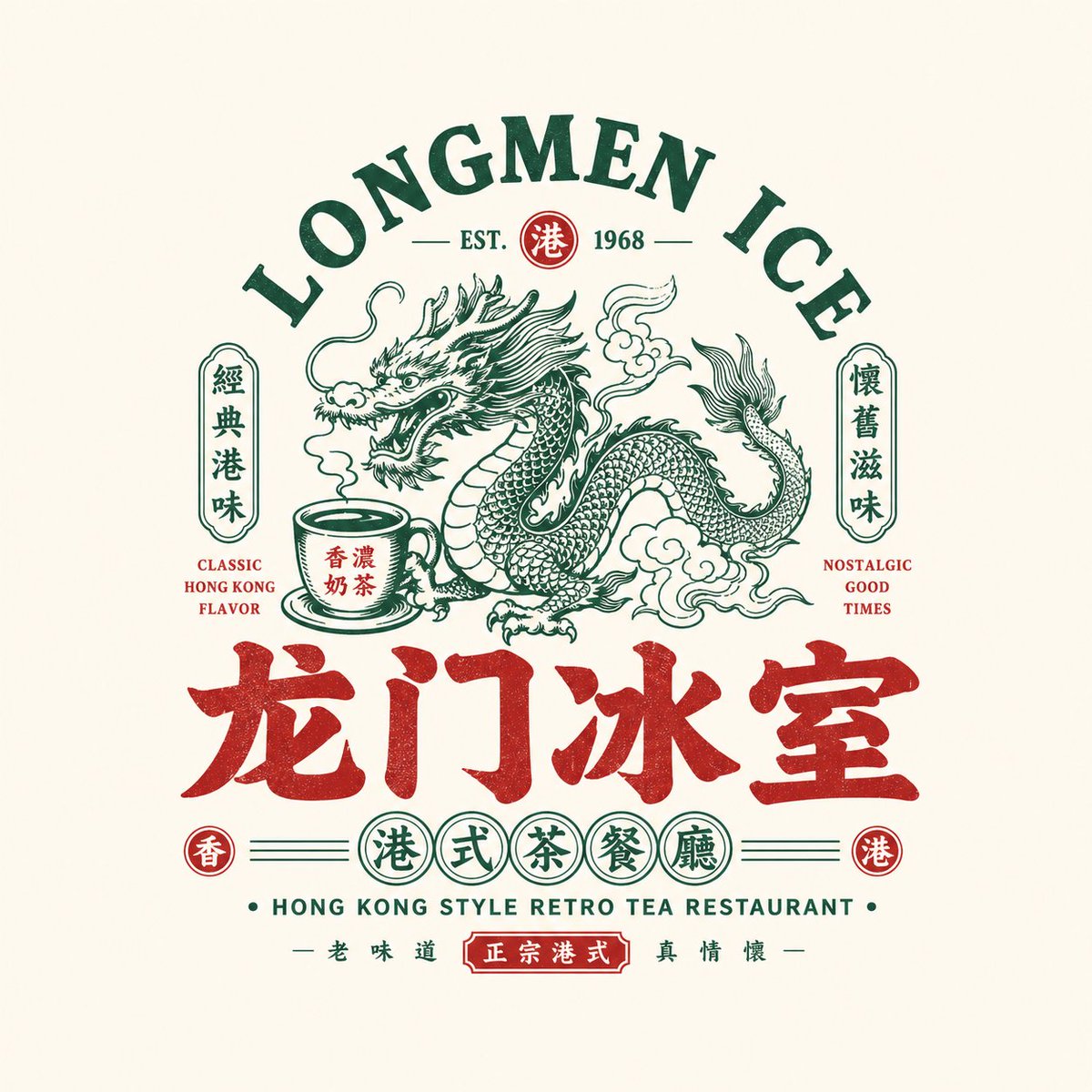
Based on the user-provided fields — [Brand / Project Name] [Subtitle / Product Name] [Type / Industry] [Regional Flavor] [Brand Positioning] [Core Keywords] [Core Graphic] [Core Food / Category Element] [Emotional Temperament] [Primary Color] [Secondary Color] [Aspect Ratio] — design a high-quality "Chinese Retro Food Emblem Logo." [User Input] Brand / Project Name: [Brand / Project Name] Subtitle / Product Name: [Subtitle / Product Name] Type / Industry: [Type / Industry] Regional Flavor: [Hong Kong-style / Cantonese / Hunan / Sichuan / charcoal / late-night / cha chaan teng / roast meats / seafood / tavern, etc.] Brand Positioning: [Brand Positioning] Core Keywords: [retro, guochao, signboard feel, old-brand heritage, lively street vibe, jianghu spirit, new-consumer feel, etc.] Core Graphic: [dragon / phoenix / crane / tiger / ox / frog / goose / fish / lobster / utensil / totem / auspicious pattern, etc.] Core Food / Category Element: [roast goose / barbecue / tea drinks / lobster / noodles / beef / ice house / tavern, etc.] Emotional Temperament: [lively, commanding, retro, classic, regional, street-vibe, jianghu, youthful, etc.] Primary Color: [Primary Color] Secondary Color: [Secondary Color] Aspect Ratio: [Aspect Ratio] [Core Goal] The task is to design a "Chinese Retro Food Emblem Logo" truly usable for a food & beverage brand. It is not an ordinary poster, not a simple cartoon illustration, and not just a few characters. Use the Chinese main wordmark as the core, integrating a strongly identifiable graphic, food-category symbols, retro bilingual typography, and a complete emblem structure, to build a food logo with storefront presence, packaging feel, brand-system feel, and shareability. The final result should convey at a glance: 1. that this is a food & beverage brand; 2. that it has a clear category and personality; 3. that it looks like the main logo of a mature brand, not a decorative pattern. [Design Essence] The core of this kind of logo is not a single graphic or a single typeface, but the integration of five layers: 1. Chinese main wordmark: brand identification; 2. Graphic symbol: memorability and category association; 3. Emblem structure: overall integrity; 4. Bilingual typography: hierarchy and retro brand atmosphere; 5. Color system: reinforcing the food tone and category emotion. [Most Important Principles] 1. The Chinese brand name must be eye-catching, clear, and signboard-like; 2. The logo must be a complete mark, not a collage of scattered elements; 3. The graphic must relate to the brand name or category, no decoration for decoration's sake; 4. English is auxiliary, Chinese is primary; English must not overpower; 5. The whole must have food-brand attributes, suitable for storefront, menu, packaging, and social avatars; 6. It must feel retro, but not dated, messy, or lacking modern brand finish; 7. It must have the flavor of a "Chinese retro food emblem," not American cartoon or Japanese shop signage. [Chinese Main Wordmark Requirements] 1. The Chinese brand name is the absolute protagonist; 2. The typeface should have retro food-signboard feel, old-packaging feel, or guochao title feel; 3. It can be heavy, bold, with sans-serif / Song-hei / commercial handwriting feel; 4. Moderate variations are allowed, but it must remain clearly legible; 5. No minimalist thin fonts, nothing weak, nothing like a default system font; 6. It must have storefront presence and brand identity. [Graphic System Requirements] Based on the [Core Graphic] and [category elements], create a main graphic highly relevant to the brand. Possible directions: - Animals / mythical beasts: dragon, phoenix, tiger, ox, goose, fish, frog, crane, etc.; - Ingredients / dishes: lobster, roast goose, beef, noodle bowl, flames, teacup, etc.; - Traditional totems: seals, patterns, plaques, auspicious motifs; - Utensils / scene symbols: grill, fire, bowls and chopsticks, ice-house elements, etc. Graphic requirements: 1. Have a memory point; 2. Have a clear relation to category and name; 3. Not be too complex or realistic; 4. Be suitable to integrate with the wordmark into an emblem; 5. May lean toward retro illustration, woodcut feel, old trademark feel, guochao line drawing. [Emblem Structure Requirements] Design the whole as a complete "food brand emblem logo," not a simple horizontal row. Reference structures: 1. English arch on top + central graphic + Chinese main wordmark below; 2. Large central graphic + small side labels + subtitle below; 3. Round seal / oval seal / plaque composition; 4. Central main image + layered text above and below; 5. Symmetrical layout + small seals + small circular badge system; 6. Old signboard / old trademark / packaging main-label layout. [Bilingual Typography Requirements] 1. Chinese primary, English auxiliary; 2. English can be used for arched main title, category name, shop-type description, slogan, year, ESTD, etc.; 3. English participates in the composition, enhancing the retro trademark feel; 4. Not much English is needed, but it must be refined, clear, and serve the whole; 5. Usable examples: - HOUSE - TAVERN - BARBECUE - ROAST GOOSE - TEA RESTAURANT - LOBSTER HOUSE - ESTD / SINCE / CLASSIC / SPECIALTY 6. English must not overpower Chinese or turn it into a purely English brand. [Auxiliary Element Requirements] A few small elements that strengthen the brand system may be added, e.g.: - ESTD year - small seal - small icons - small labels - small stamp - regional note - category note - lines / dot grids / small borders - slogan in small type But be restrained; do not turn the image into a complex poster. [Color Requirements] Choose a retro guochao food color system more suited to the category, e.g.: 1. Black + red: barbecue, braised foods, roast meats, tavern; 2. Black + gold / bronze-gold: old brands, deli, roast goose, Cantonese dining; 3. Green + red + cream: Hong Kong ice house, cha chaan teng; 4. Blue + red + white: seafood, lobster, youthful late-night dining; 5. Black + blue: younger, more rational late-night spot or tavern; 6. Red + cream: old Changsha noodles, traditional snacks, etc. Requirements: - colors with food-signboard feel; - not too many colors, 2–4 main colors is most stable; - highly saturated accents can boost eye-catch, but unity must be maintained. [Visual Presentation Requirements] 1. This is a standalone logo display image, not a menu poster; 2. Simple background, recommended light gray-white, cream, paper white, or clean light base; 3. The logo body complete, clear, and centered; 4. Complete structure and layered information; 5. The whole should look like the main-logo proposal of a mature food brand. [Style Keywords] Chinese Retro Food Emblem Logo, food brand, retro trademark, old signboard, brand emblem, bilingual layout, guochao wordmark, food main logo, storefront presence, packaging feel, old-brand heritage, new-consumer dining. [Acceptance Criteria] Ensure the final result meets: 1. instantly recognizable as a food brand; 2. the Chinese main wordmark is eye-catching and legible; 3. the graphic has a clear relation to the name / category; 4. the emblem structure is complete; 5. the bilingual typography has hierarchy; 6. the colors have food-brand temperament; 7. suitable for storefront, menu, packaging, sticker, delivery avatar, and social main image; 8. the whole has the mature commercial feel of a "Chinese retro food emblem." [Output Requirements] Finally output a high-quality "Chinese Retro Food Emblem Logo." It must center on the Chinese brand name, combining retro graphics, a bilingual auxiliary system, emblem composition, and a clear category attribute, to form a truly brandable, shareable, and deployable food brand identity.