
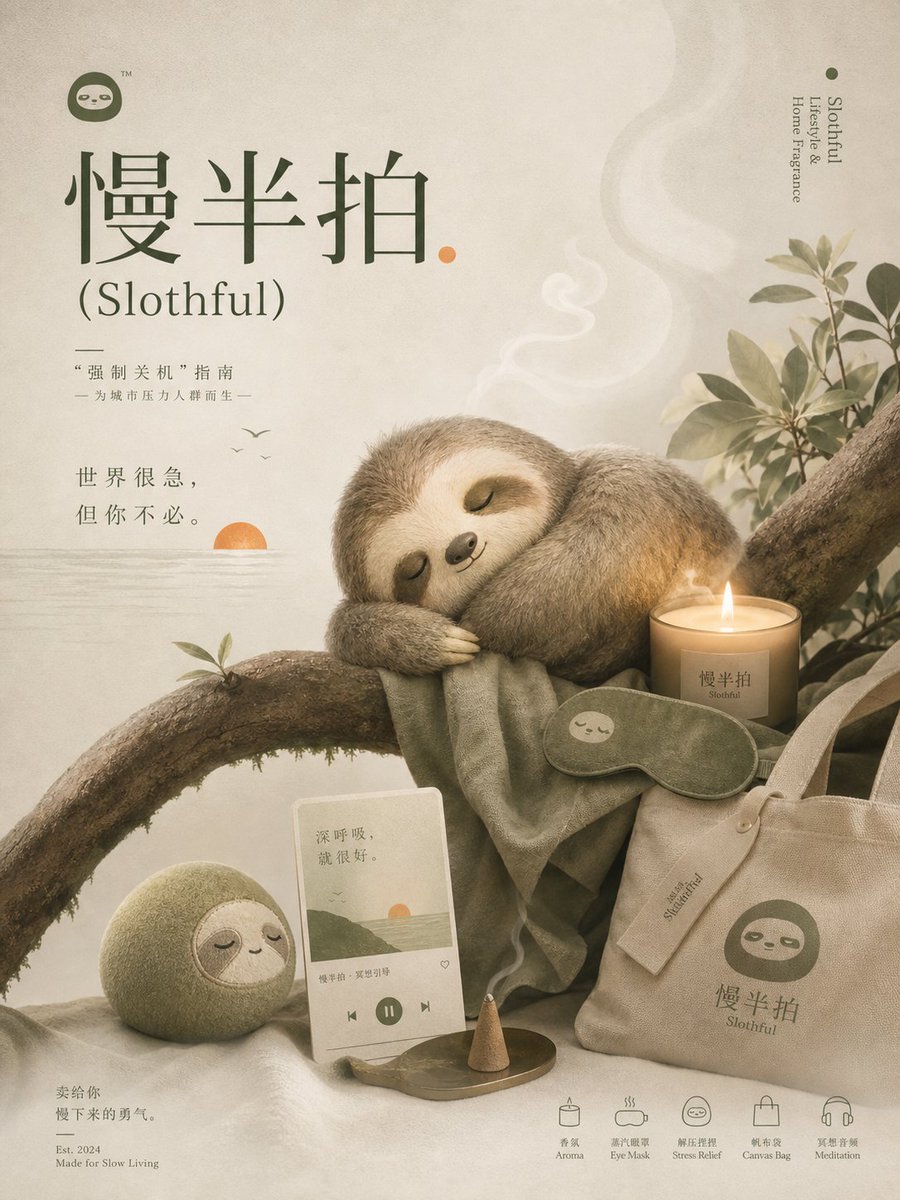
Based on the brand information entered by the user, create a high-completion set of «4 Brand Visual Proposal Boards / 4-Board Brand Visual Proposal» with a unified visual system. Note: This is NOT a four-grid collage, nor a single combined image merging all 4 contents into one frame, but a set of 4 independent images that must be «generated separately, one after another». You must complete these 4 images consecutively under the same brand visual system. All 4 images must clearly belong to the same brand, but each plays a different role and must not be merely 4 repeated variations. 【User Input】 Brand name: 【Brand name】 Brand type / industry: 【Brand type / industry】 One-sentence brand positioning: 【One-sentence positioning】 Core keywords (3–6): 【Core keywords】 Target audience: 【Target audience】 Overall style direction: 【Overall style direction】 Slogan: 【Slogan】 Flagship product / core service: 【Flagship product / core service】 Brand story / regional character: 【Brand story / regional character】 Main color tendency: 【Main color tendency】 Secondary color tendency: 【Secondary color tendency】 IP character needed: 【IP character needed: yes / no】 IP character direction: 【IP character direction】 Preferred application direction: 【Packaging / store / poster / social media / website / app / merch / other】 Styles to avoid: 【Styles to avoid】 Aspect ratio: 【Aspect ratio】 Additional notes: 【Additional notes】 【Overall Task】 First, based on the above, internally refine and unify this brand's visual DNA, then, based on that same brand DNA, generate the 4 independent images one by one. Before officially generating the 4 images, first unify the following and keep them consistent across all 4 images: 1. Core brand temperament 2. Brand visual keywords 3. Main / secondary / accent color 4. Typographic tendency and character of letterforms 5. Graphic language / auxiliary pattern language 6. The visual presentation method of the product or service 7. Whether an IP character is used and its concept direction 8. Application materials and communication scenarios suitable for the brand 9. Overall image temperament: brand feel, proposal feel, commercial feel, display feel, series feel 10. Keep the 4 images unified in style but with clear division of information, not made into 4 content-repeating variations 【Overall Unity Requirements】 1. The 4 images must clearly belong to the same brand system; brand name, color system, typographic temperament, graphic language, brand symbols, IP character (if any), and product logic must be unified. 2. The 4 images are not 4 repeated posters, but 4 brand visual proposal boards with different roles. 3. All 4 images must have high completion, brand-proposal feel, commercial feel, display feel, and portfolio quality. 4. Layouts may differ, but the overall aesthetics, design language, and visual system must be highly unified. 5. Automatically match the most suitable visual application content according to the brand type: - Food / beverage: packaging, cups, paper bags, bottles, labels, stores, advertising posters, etc. - Beauty / FMCG: bottles, boxes, gift sets, series packaging, displays, advertising KVs, etc. - Tech / digital brands: website hero screen, app UI, brand cards, digital scenes, UI showcases, etc. - Cultural-creative / IP / retail: merch, stickers, badges, gift sets, tote bags, posters, stores, etc. 6. If text appears in the image, ensure the brand name, titles, and module names are concise, clear, and brand-like, without piling up long, redundant copy. 7. Each image should be suitable for independent display, and when the 4 are placed together it must clearly read as a complete set of proposals. 8. Do not merge the 4 images into one, do not make a four-grid, do not make a single-page overview collage. 9. Generate in order: Image 1 → Image 2 → Image 3 → Image 4. 10. Generate only the current independent image each time, and automatically continue the brand system already established, until all 4 are complete. 【Fixed Structure and Roles of the 4 Images】 Image 1: Brand Hero Board This image is responsible for «setting the tone»; it is the cover of the whole proposal and the first visual memory point. Must highlight: - Brand name - Slogan (if any) - Core brand temperament - Visual translation of the brand keywords - Core main-visual element - Main color system - Core symbols representing the brand: product, material, graphic, character, visual device, atmosphere elements, etc. Requirements: - More of a cover / Hero Image than a manual - Image with visual impact and refinement - Strong brand feel - Not too packed with information, highlighting the «at-a-glance memory point» - If an IP character suits the brand, it may appear, but it should serve the overall main visual Goal: Let people see at a glance who this brand is, what its temperament is, and what the first impression is. Image 2: Identity System Board This image explains «how the brand's visual system is composed». Must highlight: - Brand name / wordmark / logo-like presentation - Main, secondary, and accent colors - Typographic temperament and letterform style - Language of auxiliary graphics / patterns / icons / stickers / labels - Packaging pattern logic or brand identity elements - If suitable, also include a systematized showcase of the IP character, such as expressions, poses, extension methods Requirements: - More structured and proposal-like than Image 1 - More like a brand-system proposal board, but not as rigid as a traditional VI manual - Clear modules, clear logic - Keep the aesthetics refined, not turned into information piling Goal: Let people clearly understand how this brand's visual identity language was built. Image 3: Product & Packaging Board This image shows how the brand actually lands on «product / packaging / service carrier», reflecting commercial implementation capability. Automatically match the most suitable application form by brand type, for example: - Food / beverage: cups, bottles, cup sleeves, paper bags, straw covers, packaging boxes, takeaway bags, stickers, labels, etc. - Beauty / FMCG: bottles, cans, boxes, gift sets, series packaging, shelf displays, etc. - Tech / digital brands: website homepage, app UI, brand cards, digital product interfaces, service showcases, etc. - Cultural-creative / IP / retail: merch, badges, stickers, stationery, gift sets, labels, packaging extensions, etc. Requirements: - Emphasize «productization / packaging / sellable / usable / deployable» - Have at least one main application carrier, with several extension applications allowed, but with clear primary-secondary hierarchy - The image should have real commercial photography feel, product display feel, or proposal-board display feel - Don't just pile up objects; it should be clear that the unified brand system has already been implemented Goal: Let people see that this brand has not only a concept but can truly become a sellable, usable, and executable product system. Image 4: Campaign & Space Board This image shows the visual effect of the brand once it enters real communication scenarios, reflecting brand recognizability, communication power, and scenario extension capability. Automatically match the most suitable scenario by brand type, for example: - Storefront facade / signage / counter / wayfinding system - Poster KV / social media advertising / standee / light box / outdoor advertising - Pop-up store / exhibition booth / brand event space / display space - Website hero screen / social media feed / digital communication interface Requirements: - A stronger scene feel than Image 3, reflecting the brand's communication effect once it enters the real world - It may lean more toward advertising, spatial, and display feel, but still retain the proposal temperament - Do not repeat Image 3 as a mere packaging-display image - The brand system must remain unified: brand name, colors, typography, graphics, IP character (if any), and tone must all be consistent Goal: Let people see that this brand has distinct recognizability and strong brand expression in real communication and application scenarios. 【Execution Method】 Strictly follow this process: 1. First, internally understand and unify the brand's visual DNA. 2. Then start generating Image 1: the Brand Hero Board. 3. While keeping the same brand system, continue generating Image 2: the Identity System Board. 4. While keeping the same brand system, continue generating Image 3: the Product & Packaging Board. 5. While keeping the same brand system, continue generating Image 4: the Campaign & Space Board. 6. Throughout the process, do not merge the 4 images into one, do not turn it into a four-grid, do not let the contents repeat. 7. Always remember: these are 4 consecutive brand visual proposal images of the SAME brand, not 4 different projects. 【Final Goal】 Output a set of 4 independent yet highly unified brand visual proposal images: - Image 1 sets the tone - Image 2 explains the system - Image 3 implements the product - Image 4 implements communication and scenario The whole set should possess: a unified brand visual DNA, clear page division, high-completion aesthetics, commercial proposal feel, display feel, portfolio quality, and a result usable directly for brand concept presentation.