
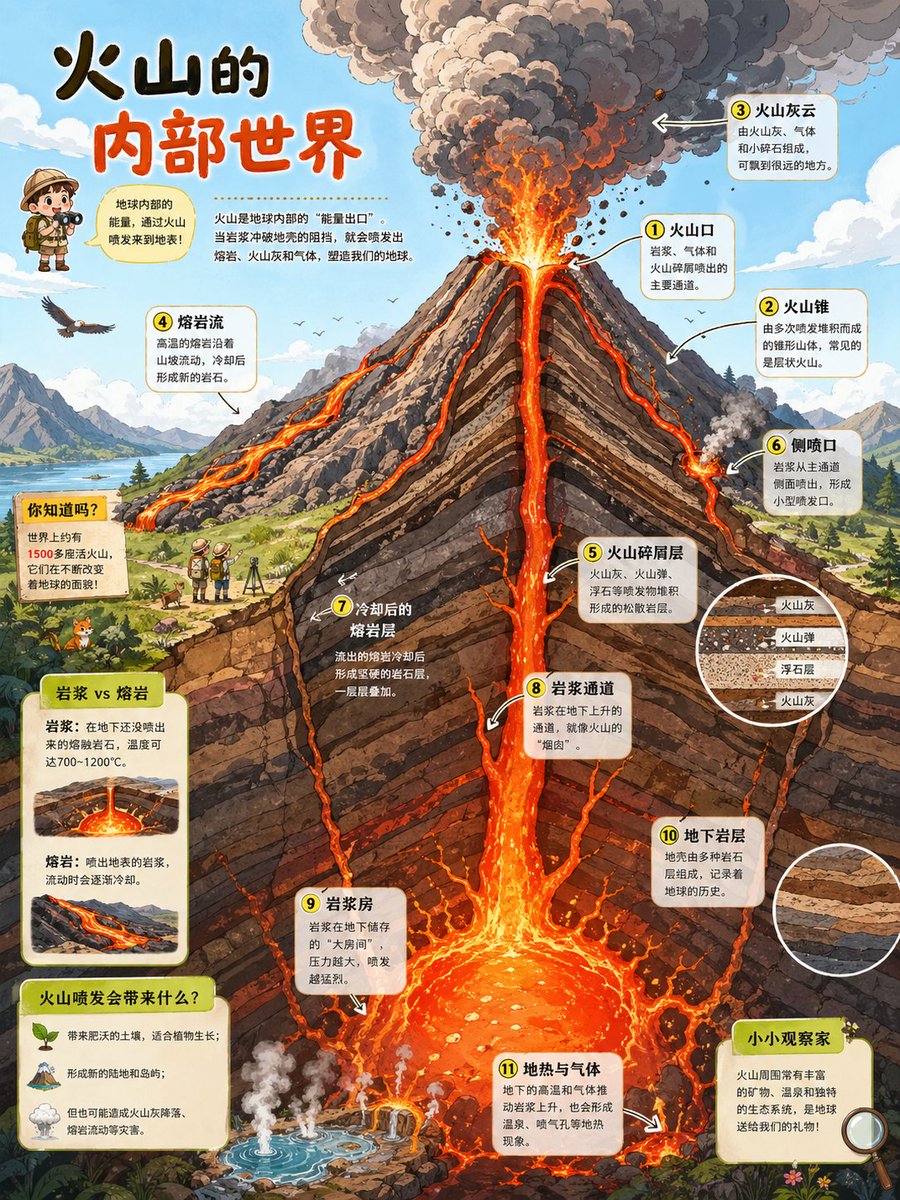
Based on the [THEME], create a high-completion illustration suitable for serialized publishing, in the "Cutaway Educational Picture Book" style. This is neither an ordinary illustration nor a purely realistic structural diagram, but a knowledge-type visual combining "cutaway display + internal structure explanation + functional-zone diagram + picture-book texture + information annotation system." The viewer should see the subject's external form, internal structure, hierarchical relationships, functional logic, and key knowledge points at once — with both an explanatory diagram feel and a lively, fun picture-book reading experience. [INPUT THEME] Theme: [fill in here, e.g. heart / sunflower / dragon / library / volcano / whale / castle / submarine / magic tree] [AUTOMATIC UNDERSTANDING RULES] Do not mechanically copy a single template; based on the [THEME], automatically judge the most suitable visual expression and complete: 1. Judge which category the theme is closest to, e.g. human body, animal, plant, architectural space, machinery, vehicle, natural geography, fantasy setting, or other. 2. Judge the best content focus, e.g. internal structure, functional zones, working principle, growth process, ecological relationships, hierarchy system, spatial organization, or energy flow. 3. Judge the audience's comprehension level, overall leaning toward "readable by children + understandable as popular science." 4. If the theme is broad, automatically focus on the most representative core object or the typical form best suited to a cutaway. 5. If the theme is not suited to a strict anatomical cutaway, use "partial cut-open / translucent display / layered unfolding / cross-section explanation / interior-space reveal." [FORMAT AND COMPOSITION] Fixed aspect ratio: 3:4 vertical. The composition should follow the layout conventions of high-quality cutaway science picture books or diagram illustrations, suited to a complete vertical knowledge illustration and to display ratios on platforms like Xiaohongshu. The subject should be centered, fully using the vertical space to create stronger vertical visual focus. Through vertical extension, top-bottom layering, a centered main cutaway, and explanatory info distributed around the subject, make the external outline and internal structure both clear at once. The composition should be clear, full, and balanced, with a defined subject, natural information zoning, and a smooth reading path, suited to vertical viewing. [CONTENT REQUIREMENTS] The image should, as much as possible: 1. Have an instantly recognizable subject with a clear external outline. 2. Have legible internal structure, internal space, or layering, with a sense of hierarchy and zones. 3. Have key areas with clear functional meaning or explanatory value. 4. Include a moderate amount of small figures, animals, characters, or micro-interaction scenes for fun and readability. 5. Include infographic elements like arrows, numbering, short Chinese subheadings, caption boxes, detail zoom boxes, and knowledge tips. 6. Be rich in information but not cluttered: captivate at first glance, reveal structure at second, and keep yielding details at third. 7. Optimize the layout for the vertical format, avoiding the subject becoming loose from excessive horizontal stretching. [VISUAL STYLE] A high-completion children's science picture-book style, combining knowledge, warmth, and readability: - clear, natural hand-drawn lines - outlines and shapes with a slight picture-book feel - bright, gentle, clean colors - clear structure but not over-engineered - rich detail without clutter - a sense of exploration, reading, and observational pleasure - between "children's picture-book illustration" and "explanatory diagram" - keep the picture-book style but cleaner, more modern, and fresher [MATERIAL AND TEXTURE] Keep the picture-book illustration character, but do not add obvious paper-material effects. Do not include: - paper texture - paper indentations - print noise - vintage aged texture - center page crease - page-binding gutter - excessive paper graininess - yellowed-paper or old-book feel Overall it should look like a "finished modern children's science picture-book illustration" or a "digitally drawn high-quality picture-book diagram page," not a scanned paper page. [LAYOUT AND TEXT] A strong "picture-book page + diagram info panel" character. Text annotations need not be many, but should be natural, concise, and clear — short Chinese labels or brief phrases. The annotation system should serve understanding, not fill the whole page or steal the subject's visual focus. Text and graphic explanatory elements should naturally blend with the illustration into a unified knowledge-diagram layout. [COLOR] Automatically match suitable main and accent colors to the theme, while keeping: - bright, soft, readable - subject prominent, background clean - clear layers, not dirty or gray - suited to children's cognition and popular-science reading - a few accent colors for vitality [FORBIDDEN TENDENCIES] Do not make: - a purely medical-textbook realistic atlas - a cold industrial blueprint - overly juvenile simple doodles - an ordinary poster illustration with no internal structure - a purely decorative image lacking explanation - chaotic information clutter - a cyberpunk heavy-light-pollution image - an old-book effect with obvious paper-scan feel, page creases, or print texture [FINAL GOAL] Make the image look like a brilliant vertical diagram page from a high-quality modern science picture book, and also like a cutaway knowledge illustration worth observing repeatedly. It should have both knowledge and beauty, both explanatory structure and fun reading; suited to children yet feeling refined, clear, and good-looking to adults. Overall suited to vertical display on Xiaohongshu — visually focused, information-clear, style-unified, and with a series feel.